
Grilled Steak with Sweet-Heat Marinade Recipe
The marinade that makes a $7 cut taste like a steakhouse — plus how to tenderize, grill, and slice budget steak so it's never, ever chewy.
By KC | Posted June 13 2026 | Updated July 28th 2026
Jump to: Ingredients | How to Make It | How to Tenderize Cheap Steak | What I Tested | FAQ
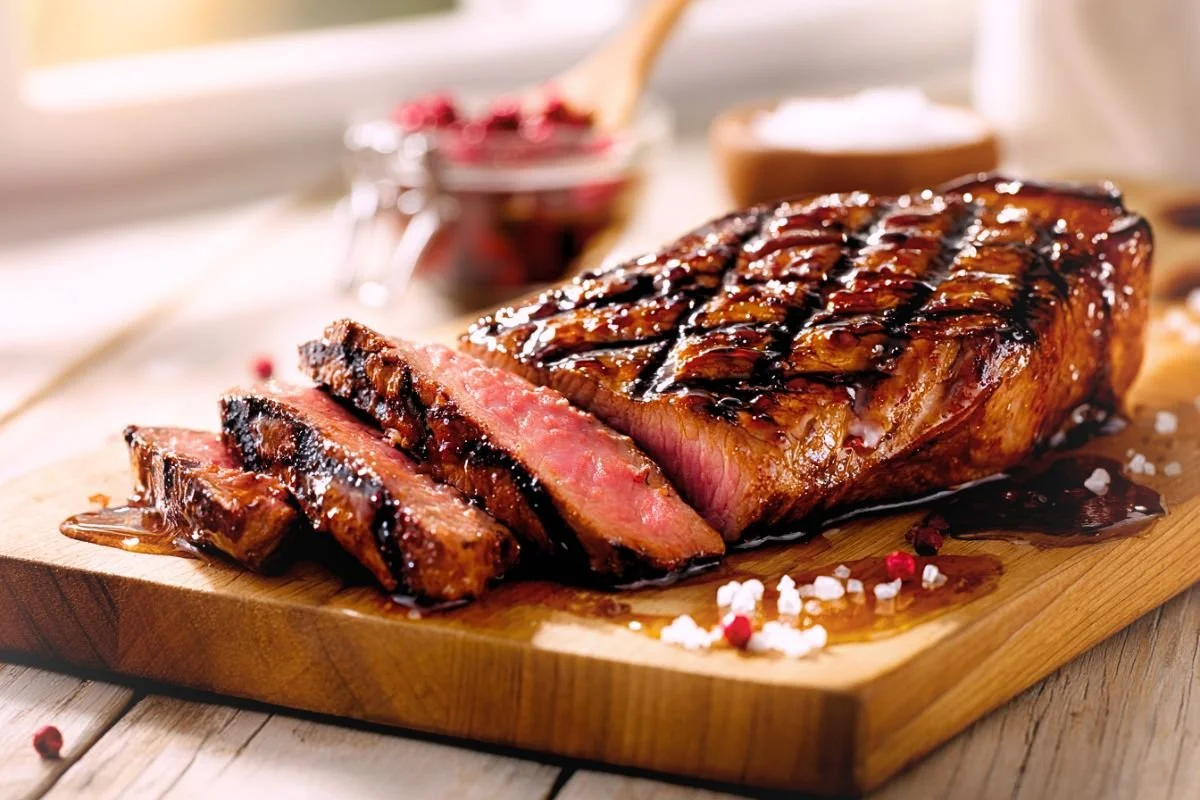
Grilled Sirloin Steak with Sweet-Heat Marinade | The from-scratch honey-and-hot-honey marinade that makes a cheap cut taste like a steakhouse — tender, juicy, never chewy. Plus how to grill it hot and slice it right.
I spent way too many years believing that good steak meant expensive steak. Fifteen years in restaurants will do that to you — you get used to ribeyes and filets and start thinking anything under a certain price tag is a lost cause. Then I started feeding four daughters on a real-life grocery budget, and "let's all have ribeye" stopped being a sentence I could say out loud. So I figured out the cheap cuts instead. And here's what nobody tells you: a properly marinated, properly grilled, properly sliced top sirloin will out-eat a carelessly cooked ribeye every single time.
This grilled sirloin steak is the recipe my family asks for all summer, and it's built on three things the budget cuts actually need: a sweet-heat marinade made from real ingredients (no mystery bottle), a tenderizing method that takes the chew out of leaner meat, and a slicing trick that does half the work for you. The marinade is the star — honey and a hit of hot honey for the sweet, garlic and ginger and chili for the heat, lime and a splash of soy doing the tenderizing in the background. It's the kind of sweet-heat flavor everyone's chasing right now, except you can pronounce everything in it and it costs about a dollar to make.
I'll walk you through the whole thing: which budget cuts to grab, how to tenderize them so they don't turn into a jaw workout, exactly how to grill them on whatever you've got (gas, charcoal, flat-top, or pellet — I tested all of them and they are not the same), and how to slice them so every bite is tender. This is the from-scratch, no-chewy-steak guide I wish someone had handed me ten years and a lot of wasted sirloin ago.
Prep Time: 10 minutes (+ 4–8 hours marinating) | Cook Time: 10 minutes | Total Time: 4 hours 20 minutes (mostly hands-off) | Servings: 4
Heat Level: Mild-Medium (fully adjustable)
Cost: Budget cuts — feeds 4 for the price of one ribeye
Why You'll Love This Steak
Cheap cut, expensive flavor. Sirloin, flank, or flat iron — all under steakhouse money, all incredible with this marinade.
Real-ingredient sweet heat. Honey, hot honey, garlic, ginger, lime. Nothing you can't pronounce, nothing from a packet.
Actually tender. The marinade plus the slicing method is what kills the chew. This is the part most recipes skip.
Works on any grill. Gas, charcoal, Blackstone, or pellet — I tested all four and give you the settings for each.
Meal-prep gold. Slices beautifully cold over salads, into wraps, onto rice bowls all week.
Ingredients
For the sweet-heat marinade:
⅓ cup olive oil or avocado oil — the fat carries flavor into lean cuts and keeps them from drying on the grill
¼ cup low-sodium soy sauce (or coconut aminos for a cleaner, soy-free version)
3 tbsp honey (or pure maple syrup — both are natural sweeteners that caramelize beautifully on the grill)
2 tbsp hot honey (I use Mike's Hot Honey — this is where the "heat" in sweet-heat comes from; see Variations to adjust)
2 tbsp fresh lime juice (or apple cider vinegar — this is your tenderizing acid)
1 tbsp Worcestershire sauce — umami depth; check the label for gluten-free if needed
4 garlic cloves, minced
1 tbsp fresh ginger, grated
1 tsp red pepper flakes (adjust to taste)
1 tsp kosher salt
½ tsp black pepper
For the steak:
2 lbs budget steak — top sirloin, flank, or flat iron (see the cut guide below)
2 tbsp butter, for finishing (optional but worth it — more on this in the tenderizing section)
Flaky finishing salt
Best budget cuts for this recipe (in order of how forgiving they are):
Top sirloin — lean, beefy, holds up to high heat. The everyday workhorse and the cut I default to.
Flank steak — big, flat, soaks up marinade like a sponge. Lean, so do not overcook it.
Flat iron — surprisingly tender for the price (second only to filet in tenderness), great marbling, hard to mess up.
Also great: skirt steak, tri-tip, chuck eye ("poor man's ribeye"). All love this marinade.
How to Make Grilled Sirloin Steak
Step 1 — Make the marinade. Whisk the oil, soy sauce, honey, hot honey, lime juice, Worcestershire, garlic, ginger, red pepper flakes, salt, and pepper together in a bowl until the honey fully dissolves. Taste it — it should read sweet first, then warm. Adjust hot honey or red pepper to your crowd.
Step 2 — Marinate (this is where tenderizing starts). Put the steak in a zip-top bag or shallow dish and pour the marinade over, pressing out the air so the meat is fully coated. Refrigerate 4 to 8 hours. Four is good, eight is better. Do not go past 12 — the acid will start to break the surface down into a mushy texture, which is the opposite of what we want.
Step 3 — Take the chill off. Pull the steak out 30–45 minutes before grilling and let it come toward room temperature on the counter. Cold-in-the-middle steak cooks unevenly and you end up overcooking the outside chasing the center. Pat it dry with paper towels — wet steak steams instead of searing, and you want a hard crust.
Step 4 — Get the grill screaming hot. You want high, direct heat — around 450–500°F at the grate. A properly hot grill is what gives budget cuts a deep crust in the short time before the inside overcooks. (Full grill-type settings — gas, charcoal, Blackstone, pellet — are in the next section.)
Step 5 — Sear hard, flip once. Lay the steak down and leave it. Don't poke it, don't move it. Sear 3–4 minutes until it releases easily and has a deep brown crust, then flip once and sear the other side 3–4 minutes. For thick sirloin, move it to the cooler side to finish.
Step 6 — Pull at temperature, not by time. This is the whole game with lean cuts — they go from perfect to chewy fast. Use a thermometer and pull the steak 5°F before your target (it keeps cooking while it rests):
Rare: pull at 120°F → rests to 125°F
Medium-rare (sweet spot): pull at 128°F → rests to 133°F
Medium: pull at 135°F → rests to 140°F
Medium-well: pull at 145°F → rests to 150°F
(USDA recommends 145°F with a 3-minute rest for whole cuts. For lean budget steak, medium-rare to medium is where it's most tender.)
Step 7 — Butter baste, then REST. Move the steak to a board, drop the 2 tbsp butter on top, and let it melt into the meat. Now walk away for at least 5–10 minutes. Resting lets the juices redistribute — slice too soon and they run out onto the board, leaving you with dry, chewy steak. The rest is not optional.
Step 8 — Slice against the grain (the most important step). Look at the steak and find the direction the muscle fibers run — those long parallel lines. Slice across them, perpendicular, into thin strips. This shortens every fiber so your teeth don't have to. Slicing budget cuts with the grain is the #1 reason they turn out chewy, even when everything else was perfect. Finish with flaky salt and serve.
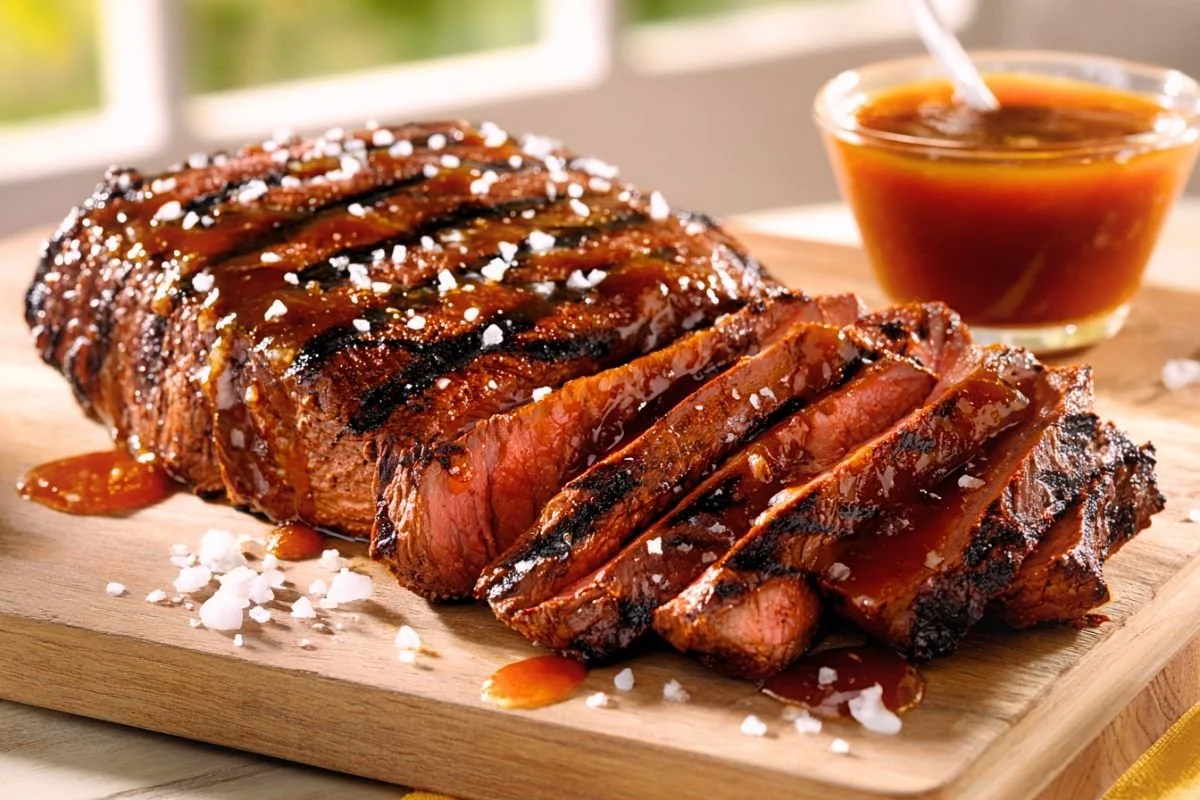
Grilled Flat Iron Steak with Sweet-Heat Marinade | The most tender cheap cut on the grill, glazed in a from-scratch honey-hot-honey marinade. Juicy, easy, and steakhouse-good for a fraction of the price.
How to Grill Steak by Grill Type (Gas, Charcoal, Blackstone, Pellet)
Every grill behaves differently, and the marinade's sugar (honey) changes the math — it caramelizes fast and can scorch if your heat is wrong. Here's exactly how to handle each.
Gas grill: Preheat all burners on high, lid down, 10–15 minutes until you hit ~500°F. Sear over direct heat, then if the steak is thick, slide it to a burner you've turned to low to finish gently. Gas is the most controllable of the live-fire options — your temperature is whatever the dial says.
Charcoal grill (or charcoal in a gas grill): Build a two-zone fire — all the coals banked to one side. Sear directly over the coals, then move to the empty side to finish without burning the honey. Charcoal gives you the best char and a touch of smoke, but the temperature is genuinely temperamental (more on that in What I Tested) — keep the lid vents open and watch it, don't set a timer and wander off.
Blackstone / flat-top griddle: Crank it to high and let it fully preheat — you want it ripping hot. Add a thin layer of high-smoke-point oil, lay the steak down, and don't touch it. The flat-top gives you the most even, edge-to-edge crust of any method because the whole surface of the steak is in contact with the heat. This was my surprise favorite for sirloin. Finish the butter baste right on the griddle.
Pellet grill (and a note on smoke settings): Pellet grills are best for a reverse sear on thicker cuts: run it low with the smoke setting on to build flavor, bring the steak up to about 110–115°F internal, then crank to max heat (or move to a separate screaming-hot surface) to sear the crust.
Verify before you write your own smoke numbers: smoke-level controls are not standardized across brands. Traeger uses a "Super Smoke" toggle that works in a set low-temp range; other brands (Pit Boss, Z Grills, recteq, etc.) use a numbered smoke dial, often 1–10 or a "P-setting." So "set smoke to 4" means different things on different machines. Check your specific grill's manual for what its smoke setting actually does before following any recipe that gives a universal number. The reliable instruction that works on every pellet grill: run low (around 180–225°F) with maximum smoke for the first stage, then sear hot at the end.
How to Tenderize Cheap Steak (So It's Never Chewy)
Budget cuts are tougher because they come from harder-working muscles with more connective tissue. Good news: tough is fixable. Here's every lever you can pull, from most to least important.
1. Slice against the grain. Already covered above, but it's worth repeating because it matters more than anything else on this list. It mechanically shortens the muscle fibers. You can do everything else wrong and still get tender steak if you nail this one.
2. Use an acid in the marinade. The lime juice (or apple cider vinegar) in this recipe gently breaks down surface proteins. Stay in the 4–8 hour window — too long and acid turns the texture mushy and grainy.
3. Add fat — in the marinade AND at the finish. Lean budget cuts don't have the internal marbling that keeps a ribeye juicy, so you add it back. The oil in the marinade coats the fibers and slows moisture loss on the grill. The butter baste at the end melts into the warm meat and carries richness into every slice — this is the single easiest upgrade for a lean cut. You can also lay a pat of compound butter (butter mashed with garlic and herbs) on the resting steak for a steakhouse finish.
4. Salt early. The salt in the marinade isn't just for flavor — given a few hours, it draws moisture in and helps the proteins hold onto water, so the steak stays juicier on the grill. This is a mini dry-brine happening inside your marinade.
5. Pound or score the thick ones. For uneven cuts like flank or skirt, a few light passes with a meat mallet evens the thickness so it cooks uniformly. For very tough cuts, lightly score a shallow crosshatch on the surface — it breaks up long fibers and gives the marinade more way in.
6. Don't overcook it — and rest it. Heat tightens muscle fibers and squeezes water out. Pull at temperature (Step 6), rest a full 5–10 minutes (Step 7). Overcooking is the fastest way to make a perfectly marinated budget cut chewy.
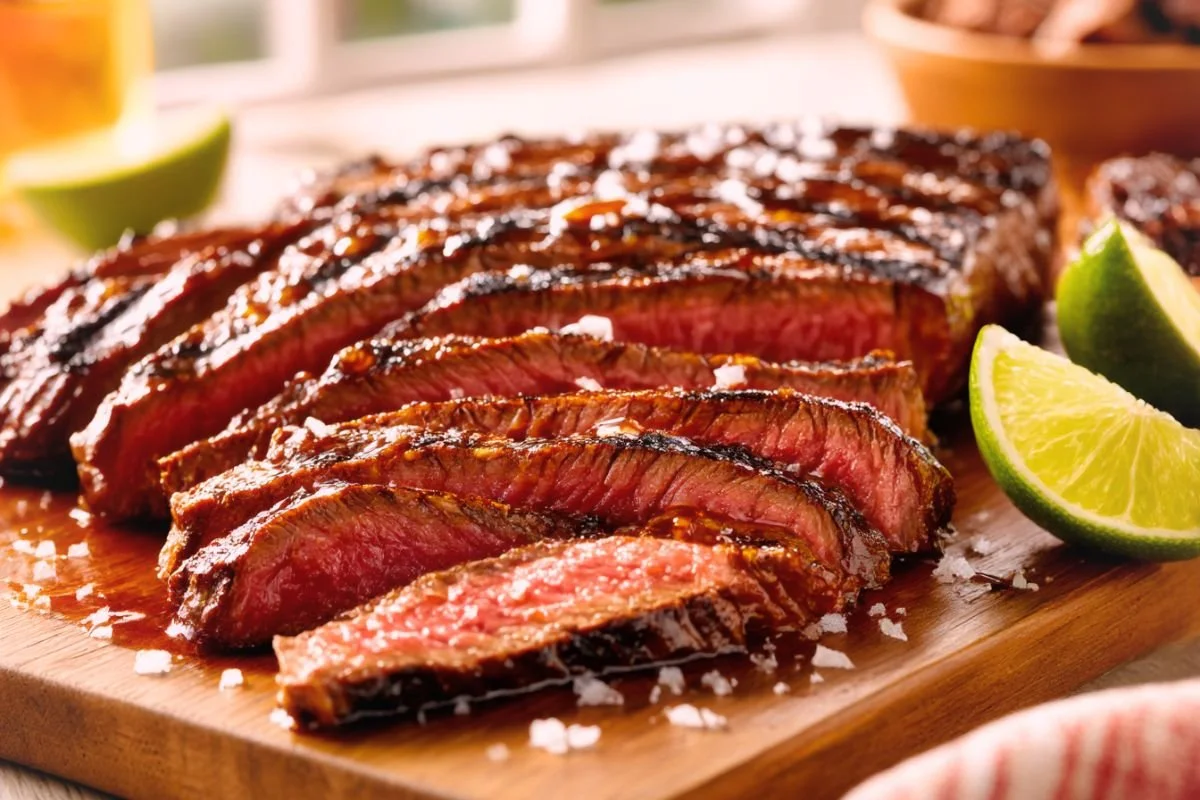
Grilled Flank Steak with Sweet-Heat Marinade | A budget cut soaked in a real-ingredient sweet-heat marinade, grilled hot and sliced against the grain so every bite stays tender, not chewy.
What I Tested So You Don't Have To
Blackstone vs. gas grill vs. charcoal — the temperature reality. I ran the same marinated sirloin across three setups, and the honest takeaway is that the crust is what separates them, and the temperature control is what makes or breaks each one.
The Blackstone flat-top was my surprise winner for sirloin. Because the entire underside of the steak sits flat against the hot steel, you get an even, edge-to-edge crust you genuinely cannot get on grates — grates only sear where the metal touches. It's also the most consistent temperature of the three: it's hot, it stays hot, it doesn't flare.
The gas grill was the most predictable. The dial is the temperature, more or less, and that consistency makes it the easiest to not screw up — especially with a sugary marinade that wants to scorch.
The charcoal grill (and charcoal added into the gas grill for smoke) gave the best flavor — real char, real smoke — but the temperature is genuinely temperamental. It surges when you open the lid and feed it oxygen, it dies down as the coals burn off, and there's no dial to trust. With the honey in this marinade, that swing matters: too hot and the sugar burns black before the inside is done. The fix that worked for me was a strict two-zone fire — sear over the coals, then bail out to the cool side the second the crust is set. If you love charcoal flavor (I do), commit to babysitting it and keep that escape zone open.
Bottom line: for the most foolproof crust on a budget cut, the Blackstone or a hot gas grill. For the best flavor if you're willing to manage the fire, charcoal. All three work — they just don't forgive the same amount.
Marinating time. I tested 2, 4, 8, and 24 hours. Two hours = flavor on the surface only. Four to eight = flavor all the way through and noticeably more tender. Twenty-four hours = the surface went mushy and grainy from the acid. Eight hours is the sweet spot; do not go past twelve.
Honey vs. maple vs. brown sugar. All three caramelize and char nicely. Honey gave the cleanest sweet-heat with the hot honey; maple was excellent and slightly deeper; brown sugar burned the fastest, so if you use it, drop your direct-heat time. Natural liquid sweeteners (honey, maple) were both more forgiving on the grill than granulated sugar.
Hot honey amount. Two tablespoons reads as a gentle warmth most kids will eat. For an adults-only batch I've gone up to 3 tablespoons hot honey plus extra red pepper flakes, and it's fantastic.
Common Mistakes
Slicing with the grain. The single biggest cause of chewy budget steak. Always cut across the fibers.
Skipping the rest. Cut too soon and the juice ends up on the board instead of in the meat.
Grilling cold steak. Straight-from-the-fridge meat cooks unevenly. Let it sit out 30–45 minutes.
Marinating too long. Past 12 hours the acid makes the texture mushy. Set a reminder.
Cooking by the clock instead of a thermometer. Lean cuts overcook in seconds. Temp it.
Heat too low for the sugar. A lukewarm grill won't crust the steak before the honey makes it gummy. Get it hot.
Variations
Less heat (kid-friendly): Drop the hot honey to 1 tbsp and the red pepper flakes to ¼ tsp. Still sweet, barely warm.
More heat (adults only): Bump hot honey to 3 tbsp, add a minced fresh chili or ½ tsp cayenne.
Soy-free / cleaner: Use coconut aminos instead of soy sauce. Slightly sweeter, fully gluten-free.
Smoky: Add ½ tsp smoked paprika or a teaspoon of chipotle in adobo to the marinade.
Compound butter finish: Mash the 2 tbsp finishing butter with a minced garlic clove and chopped parsley; melt it over the rested steak.
Different cut, same marinade: This works on flank, flat iron, skirt, tri-tip, and chuck eye — just adjust grill time for thickness.
What to Serve With Cheap-Cut Steak
Budget steak loves a bright, fresh, cooling side to play off the sweet-heat glaze — and a starch to round it into a real meal. Here's what's already on the blog:
Viral Spicy Cucumber Salad — cool, crunchy, and a little spicy; the perfect contrast to a hot steak off the grill.
Mexican Street Corn Salad (Esquites) — creamy, smoky, cookout-ready; sits beautifully next to sliced sirloin.
Italian Grinder Pasta Salad — hearty, make-ahead, feeds a crowd.
Creamy Cowboy Caviar — scoopable, fresh, and great with the leftovers.
Homemade Pico de Gallo — spoon it right over the sliced steak as a fresh relish.
Summer Chicken Pasta Salad — cold, bright, cookout-table staple.
Slice the steak thin over any of these salads and you've turned a side into a full steak-bowl dinner.
If You Love This, Try These Next
Viral Spicy Cucumber Salad — the cooling side this steak was made for (VERIFY prefix)
Creamy Cowboy Caviar — another cookout-table MVP
Homemade Pico de Gallo — fresh, fast, goes on everything
How to Store and Reheat Grilled Steak
Fridge: Let the steak cool, then store sliced or whole in an airtight container for up to 3–4 days. Slicing before storing makes it grab-and-go for salads and wraps all week.
Freezer: Wrap tightly and freeze up to 2 months. Thaw overnight in the fridge before reheating.
The best way to reheat grilled steak — flash-fry in butter. Reheating is where good steak goes to die, because most methods just keep cooking it until it's gray and chewy. The fix is fast and hot: get a skillet screaming hot, drop in a knob of butter, and flash-fry the slices for 30–60 seconds total, just tossing them to warm through. The hot butter re-bastes the meat and gives you a fresh edge of crust without overcooking the inside. In and out — the second it's warm, it's done.
To reheat a whole steak gently: Warm it in a low oven (250°F) until it hits about 100–110°F internal, then sear it hard in a hot buttered pan for under a minute a side. This keeps the interior from overcooking.
Skip the microwave. It cooks unevenly, toughens the meat, and turns a good steak rubbery. If it's your only option, low power in 20-second bursts — but the buttered skillet is so much better and barely slower.
Cold is great too. Leftover sliced steak is genuinely excellent straight from the fridge over a salad or in a wrap — no reheating required.
Frequently Asked Questions
What is the best cheap steak to grill? Top sirloin is the best all-around budget cut — lean, beefy, and forgiving on high heat. Flat iron is the most tender cheap cut (second only to filet) and hard to mess up. Flank and skirt are excellent too, but they're leaner, so watch the cook time. All four love a marinade and all four need to be sliced against the grain.
How do you make cheap steak tender? Four things, in order of importance: slice it against the grain, marinate it with an acid (like the lime juice here) for 4–8 hours, add fat through the marinade oil and a finishing butter baste, and don't overcook it. The slicing matters most — cutting across the muscle fibers shortens them so the meat eats tender even from a tougher cut.
How long should you marinate steak? For budget cuts in an acidic marinade, 4 to 8 hours is the sweet spot. Two hours only flavors the surface; past 12 hours the acid breaks the texture down into something mushy. Eight hours gives you flavor all the way through plus real tenderizing without going too far.
Does marinating actually tenderize steak? Partly. The acid in a marinade breaks down proteins on the surface of the meat, and the salt helps it hold moisture — both make it more tender. But marinade only penetrates a few millimeters deep, so it can't tenderize the whole steak on its own. The bigger tenderizing wins come from slicing against the grain and not overcooking.
What temperature should I grill sirloin to? For the most tender result, aim for medium-rare to medium. Pull the steak off the grill about 5°F before your target because it keeps cooking as it rests: pull at 128°F for a medium-rare that rests up to 133°F. The USDA recommends 145°F with a 3-minute rest for whole cuts — that's medium and still great on a budget cut, just don't push past it or it tightens up.
Why is my grilled steak chewy? Almost always one of three things: you sliced it with the grain instead of against it, you overcooked it, or you didn't let it rest before cutting. Fix all three — cut across the fibers, pull it at temperature, and rest it 5–10 minutes — and even a cheap cut comes out tender.
Can I grill this on a pellet grill? Yes. The best approach on a pellet grill is a reverse sear: run it low with the smoke setting on, bring the steak to about 110–115°F internal, then crank the heat to max (or move to a hotter surface) to sear the crust. Note that smoke-level settings differ by brand, so check your grill's manual rather than following a universal "set smoke to X" number from any recipe.
How do I reheat grilled steak without it getting tough? Flash-fry it. Get a skillet ripping hot, melt a little butter, and toss the sliced steak for 30–60 seconds just to warm through. The hot butter re-bastes the meat and adds a fresh crust without overcooking the inside. For a whole steak, warm it in a low 250°F oven first, then sear it hard for under a minute a side. Avoid the microwave — it toughens the meat.
What's a clean, from-scratch sweet-heat marinade? The one in this recipe: oil, soy sauce (or coconut aminos), honey and hot honey for natural sweetness and heat, fresh lime juice, Worcestershire, garlic, ginger, and red pepper flakes. No bottled steak sauce, no mystery ingredients — just whole-food pantry staples that hit that sweet-heat balance everyone's after right now.
Can I use this marinade on other cuts? Absolutely. It's great on flank, flat iron, skirt, tri-tip, and chuck eye, and it works on chicken thighs and pork too. Adjust grill time for thickness and you're set.
Grilled Steak with Sweet-Heat Marinade
A from-scratch honey and hot-honey marinade that makes a cheap cut taste like a steakhouse. Tender, juicy, never chewy.
Ingredients
For the sweet-heat marinade
- 1/3 cup olive oil or avocado oil
- 1/4 cup low-sodium soy sauce (or coconut aminos)
- 3 tbsp honey (or pure maple syrup)
- 2 tbsp hot honey
- 2 tbsp fresh lime juice (or apple cider vinegar)
- 1 tbsp Worcestershire sauce
- 4 garlic cloves, minced
- 1 tbsp fresh ginger, grated
- 1 tsp red pepper flakes (adjust to taste)
- 1 tsp kosher salt
- 1/2 tsp black pepper
For the steak
- 2 lbs budget steak: top sirloin, flank, or flat iron
- 2 tbsp butter, for finishing (optional but worth it)
- Flaky finishing salt
Instructions
- Make the marinade. Whisk the oil, soy sauce, honey, hot honey, lime juice, Worcestershire, garlic, ginger, red pepper flakes, salt, and pepper until the honey dissolves. It should taste sweet first, then warm.
- Marinate 4 to 8 hours. Add the steak to a zip-top bag or shallow dish, coat it fully, press out the air, and refrigerate. Four hours is good, eight is better. Do not go past 12 or the acid turns the surface mushy.
- Take the chill off. Pull the steak out 30 to 45 minutes before grilling and pat it dry. Room-temperature, dry steak sears instead of steaming.
- Heat the grill hard. Get it to 450 to 500 degrees F at the grate. High, direct heat crusts a budget cut before the inside overcooks.
- Sear and flip once. Lay the steak down and leave it. Sear 3 to 4 minutes until it releases with a deep crust, then flip and sear the other side 3 to 4 minutes.
- Pull at temperature, not by time. Use a thermometer and pull 5 degrees before target. Medium-rare sweet spot: pull at 128 degrees F to rest up to 133 degrees F.
- Butter baste, then rest. Move the steak to a board, top with the 2 tbsp butter, and rest at least 5 to 10 minutes so the juices redistribute.
- Slice against the grain. Find the direction the muscle fibers run and cut across them into thin strips. This is the step that keeps a cheap cut tender. Finish with flaky salt.
Food safety: USDA recommends 145 degrees F with a 3-minute rest for whole cuts. For lean budget steak, medium-rare to medium eats most tender.
Recipe by KC Coler, Saucy Spoon Co.
Did You Make It?
If you grilled up a cheap cut and it came out tender enough to fool a ribeye person, I want to hear about it — drop your cut and your grill setup in the comments (team charcoal or team flat-top? settle it). Tag @saucyspoonco if you snap a photo, and pin this one to your grilling board, because budget steak season is officially every season.
Follow Saucy Spoon Co
Want more easy recipes, dinner ideas, kitchen favorites, and real-life food finds? Come hang out with me around the internet.
As an Amazon Associate, I may earn from qualifying purchases.