
Creamy, garlicky, restaurant-style — and I'll finally settle the anchovy question for you.
I made homemade Caesar dressing by the gallon for fifteen years before I ever made it for myself. Behind the bar, on the line, prepped in giant deli containers for Friday rushes — Caesar was the one dressing we never bought, because the bottled stuff tastes like a sad memory of the real thing. Once you've had it made right, there's genuinely no going back.
Here's the good news: the restaurant version is a five-minute job. One bowl, a whisk, ingredients you mostly already have. Most people who try it once and give up do it for one of two reasons — their dressing breaks into a greasy mess, or it comes out flat and beige-tasting. I'm going to fix both of those for you, and yes, I'm going to settle the anchovy debate while I'm at it (you're going to be surprised which side I land on).
This is the creamy, garlicky, sharp-with-real-Parmesan Caesar that I put on everything — salads, grilled chicken, sandwiches, roasted vegetables, and straight off the spoon when nobody's looking. Make it once and the bottle's getting donated to the back of the fridge forever.
Jump to: Ingredients | Instructions | What I Tested | FAQ
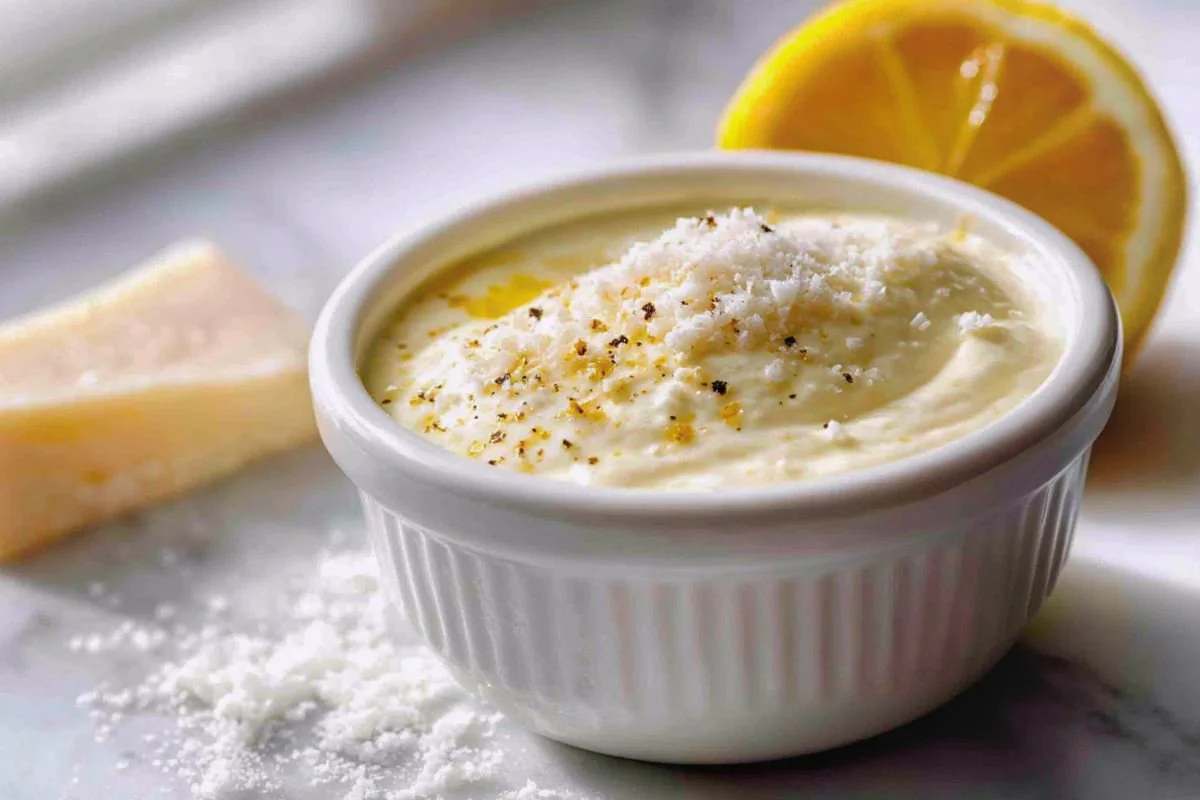
WHY YOU'LL LOVE THIS CAESAR
5 minutes, one bowl — whisk and done, no blender required
It never breaks — the mayo base is your insurance policy (more on that below)
Anchovies are optional — I'll show you the swap that gives you the same savory depth without them
Real restaurant flavor — block Parmesan, fresh garlic, real lemon, the way it's actually made
Goes on everything — salads, grilled chicken, wraps, sandwiches, roasted veg
Keeps for a week — make it Sunday, eat well all week
Prep Time: 5 minutes | Cook Time: None | Total Time: 5 minutes
Yield: About 1 cup (8 servings, ~2 tablespoons each)
Difficulty: Easy | No cook · One bowl · No raw egg
INGREDIENTS
½ cup good mayonnaise (I use Duke's — it's tangier and less sweet, which is exactly what you want here)
⅓ cup finely grated Parmesan (grate it off the block — the pre-shredded stuff is coated and won't melt into the dressing the same way)
2 tablespoons fresh lemon juice (about one lemon — bottled won't taste the same)
1 tablespoon Dijon mustard (this is your emulsifier and your backbone)
1½ teaspoons Worcestershire sauce (this is the swap — it brings the savory, umami depth that anchovies usually do)
2 cloves garlic, grated on a microplane (or 1 teaspoon finely minced)
2 tablespoons extra-virgin olive oil
Kosher salt and plenty of freshly cracked black pepper, to taste
* Grate the garlic, don't chop it. A microplane turns it into a paste that disappears into the dressing. Chopped garlic leaves you biting into raw chunks. Big difference.
* Block Parmesan only. Pre-grated Parmesan is coated in cellulose to keep it from clumping, and that coating keeps it from blending smoothly into a dressing. Two minutes with a grater is worth it.
* Salt comes last. Parmesan, anchovy, and Worcestershire are all salty. Build the dressing first, taste, then decide if it needs more salt. It usually needs less than you'd think.
INSTRUCTIONS
Build the savory base. In a medium bowl, whisk together the grated garlic, Dijon, Worcestershire, and lemon juice until it's smooth and uniform. (Doing this first means the garlic and Worcestershire distribute evenly — no hot spots, and the Worcestershire is what stands in for the anchovy depth.)
Add the mayo and Parmesan. Whisk in the mayonnaise and grated Parmesan until completely smooth.
Stream in the oil. While whisking, drizzle in the olive oil a little at a time. (Going slow here is what keeps it creamy and glossy instead of greasy.)
Check the texture. It should be thick, glossy, and coat the back of a spoon — pourable but not runny. (That glossy, spoon-coating look is your doneness cue.) If it's too thick, whisk in cold water a teaspoon at a time until it loosens.
Season and taste. Add a big crack of black pepper, taste, and only then add salt if it needs it. Adjust lemon for brightness.
Rest if you can. It's great right away, but 10–15 minutes in the fridge lets the garlic mellow and the flavors marry. It's even better the next day.
WHAT I TESTED SO YOU DON'T HAVE TO
After fifteen years of making this stuff in restaurants, I still ran it head-to-head a few ways in my own kitchen so you don't have to guess.
How I get the savory depth without anchovies. This is the question everyone asks, so I tested it properly. Caesar's signature savory, almost-funky backbone normally comes from anchovy — but Worcestershire sauce is built on the same thing (it literally has anchovy in it, already broken down and mellowed). Bumped to 1½ teaspoons, it carries that depth completely, with zero fishy bite and nothing to chop or mash. My four daughters are the real test, and the no-anchovy version is the one they actually request. If you ever want it more old-school, a teaspoon of anchovy paste melts in invisibly (see Variations) — but you do not need it.
Mayo base vs. raw egg yolk. The classic restaurant version uses a coddled or raw egg yolk. It's spectacular — and it also means raw egg, a 3-day fridge life, and a dressing that can break if you rush the oil. The mayo base gives you 90% of the creaminess, zero food-safety worry, a full week in the fridge, and it's nearly impossible to break. For a recipe people make on a Tuesday, mayo wins. (Egg-yolk version in the Variations if you want the real-deal.)
Block Parmesan vs. the green can. Not close. The block melts into a smooth, sharp, nutty dressing. The pre-grated and the shaker can both stay gritty and taste muted. This is the single biggest flavor upgrade.
Fresh garlic vs. jarred. Microplaned fresh garlic is sharper and brighter. Jarred works in a pinch but tastes a little flat and slightly sour. If you've got a fresh clove, use it.
TIPS
Too thin? Whisk in another tablespoon of Parmesan. Too thick? Cold water, a teaspoon at a time — not more oil, which can make it greasy.
Garlic too aggressive raw? Let the finished dressing sit 20–30 minutes; the bite mellows fast.
Make it pourable for salad, thick for dipping by adjusting the water at the end. Same recipe, two jobs.
Tastes flat? It's almost always under-salted or needs more lemon. Add lemon first — brightness usually reads as "missing" before salt does.
VARIATIONS
More Traditional (with anchovy): Want the old-school version? Whisk in 1 teaspoon of anchovy paste with the base. It melts in completely — no fishy bite, just a little more depth.
Classic Egg-Yolk Caesar: Replace the mayo with 1 pasteurized egg yolk and increase the olive oil to ⅓ cup, streaming it in very slowly to emulsify. Richer, more authentic, 3-day fridge life.
Lighter Greek Yogurt Caesar: Swap half the mayo for plain Greek yogurt. Tangier and lighter, still creamy.
Extra-Garlicky: Double the garlic. For the people who know who they are.
WHAT TO SERVE WITH IT
Classic Caesar salad — crisp romaine, shaved Parmesan, croutons, and this dressing. The whole point.
Grilled chicken — drizzle it over hot-off-the-grill chicken, or build a chicken Caesar wrap.
As a sandwich spread — it's incredible on a chicken or turkey sandwich instead of plain mayo.
Roasted vegetables — spoon it over roasted broccoli or asparagus while they're still warm.
A creamy pasta salad — toss it with chopped romaine, pasta, and Parmesan for a Caesar pasta salad.
STORAGE
Store in an airtight jar in the fridge for up to 1 week. It thickens when cold — that's normal. Let it sit at room temp for a few minutes and give it a stir, or whisk in a teaspoon of water or lemon juice to loosen it back up. Don't freeze it — the emulsion separates and won't come back together.
Frequently Asked Questions
Can I make Caesar dressing without anchovies? You already are — this whole recipe is the no-anchovy version. The trick is Worcestershire sauce bumped up to 1½ teaspoons; it carries the same savory, umami depth anchovies give a classic Caesar, with no fishy taste and nothing to mash. If you ever want it more traditional, a teaspoon of anchovy paste melts right in (see Variations), but you genuinely won't miss it.
Is this dressing safe — doesn't Caesar have raw egg? The classic does, but this version doesn't. I use a mayonnaise base instead of raw egg yolk, so there's no food-safety worry and it keeps for a full week. If you want the traditional egg-yolk version, use a pasteurized yolk (see Variations).
Why is my Caesar dressing bitter or flat? Bitter usually means too much raw garlic — let it sit 20 minutes and it mellows. Flat almost always means it needs more lemon or salt, in that order. Add the lemon first; brightness is usually what's missing.
Why did my dressing turn out thin or greasy? Thin: whisk in more grated Parmesan. Greasy: you added the oil too fast — next time stream it in slowly while whisking so it emulsifies. This mayo-based version is very forgiving, so it's hard to truly break.
How long does homemade Caesar dressing last? Up to a week in an airtight container in the fridge. The flavor actually deepens after the first day. Stir before using.
Can I make it ahead? Absolutely — it's better made ahead. Make it the day before and let it rest overnight so the garlic and Parmesan have time to come together.
If You Love This Recipe, Try These
Cilantro Lime Crema — another 5-minute sauce that goes on everything. If Caesar is your creamy classic, this is your bright, zesty one.
Mexican Street Corn Salad — creamy, tangy, and built around a dressing you'll want to put on a spoon. A natural next make if you love a good dressed salad.
Italian Grinder Pasta Salad — the crowd-pleasing, deli-style pasta salad that disappears at every cookout.
Creamy Chicken Bacon Ranch Pasta — if creamy and garlicky is your love language, this one's for you.
Bang Bang Grilled Chicken — the perfect protein to pile on a Caesar salad or wrap.