
Pantry Spaghetti (Easy One-Pot Use-What-You-Have Dirty Spaghetti Dinner)
The no-plan, no-grocery-run dinner I make almost every week — built to work with whatever's already in your kitchen.
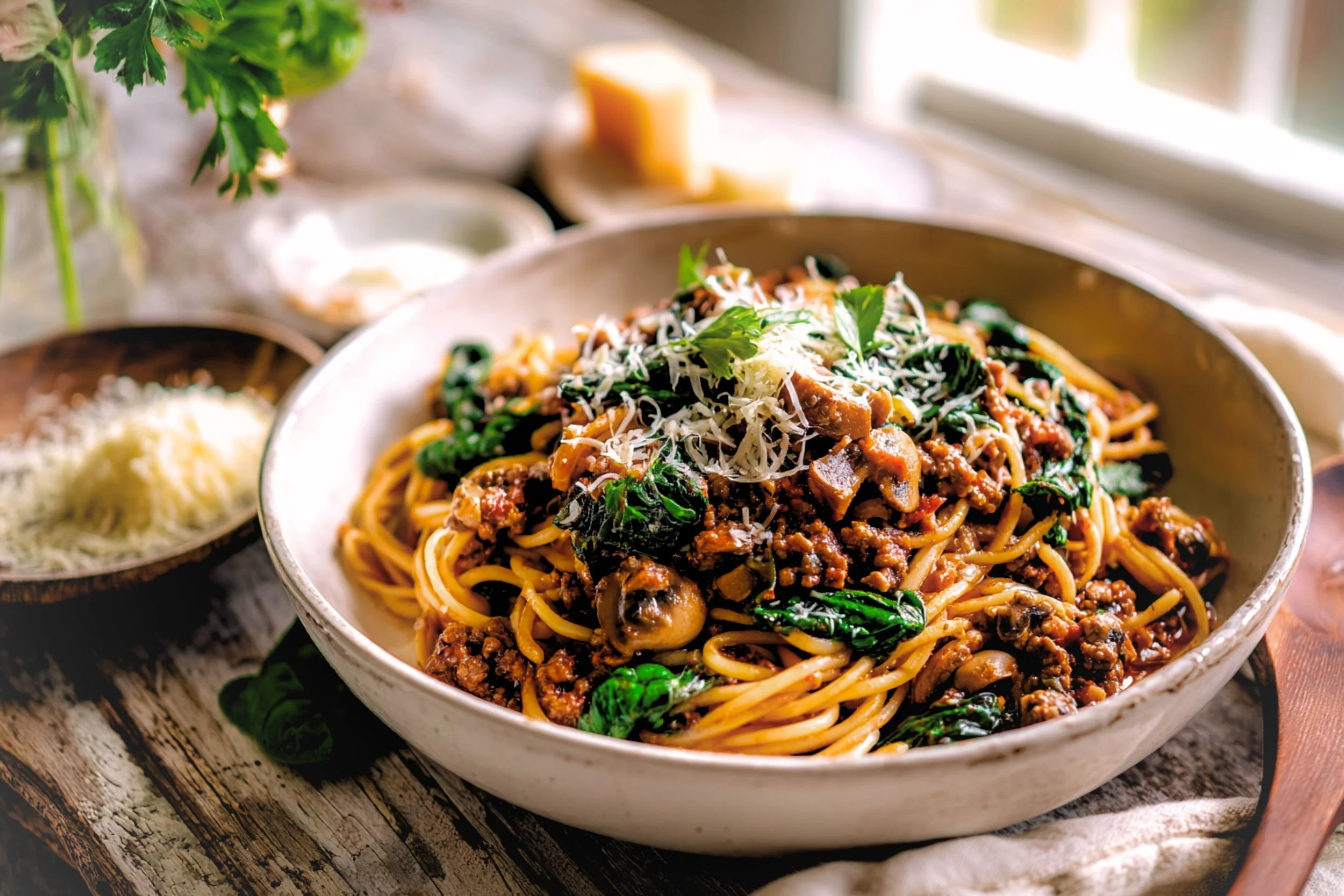
Pantry dirty spaghetti is less a strict recipe and more a reliable plan for the night you open the fridge, sigh, and realize a grocery run isn't happening. If you've got a pound of ground beef, a box of spaghetti, and a few odds and ends, you have dinner — and it'll be a genuinely good one.
It runs on the dirty spaghetti method: the pasta cooks right in a seasoned, meaty sauce instead of a separate pot of water, so the noodles soak up flavor and you only wash one pot. But the real point of this one is flexibility. The base below is your skeleton. Everything after it is a mix-and-match list, so you can build the dish around what you actually have — random shredded cheese, half a bag of spinach that's about to turn, leftover rotisserie chicken instead of beef.
I make some version of this almost every week, usually on a Thursday, and I tested it specifically to be hard to mess up. The notes below cover the swaps I've actually leaned on and the one mistake that makes a "use what you have" dinner taste like sad pasta — so yours won't.
Here's why it earns a spot in your rotation: it's the meal that uses up the odds and ends before they go bad, it's about as cheap as dinner gets, and it never looks quite the same twice. For real home cooks trying to stretch a grocery budget, that's not a gimmick — that's a genuinely useful skill.
This post contains affiliate links. As an Amazon Associate I earn from qualifying purchases, at no extra cost to you. I only recommend tools I actually use in my own kitchen.
Jump to: Ingredients · Instructions · FAQ
Why You'll Love This Recipe
It works with what you already have. No specific shopping list, no special trip — the recipe bends to your kitchen, not the other way around.
One pot, genuinely. The pasta cooks in the sauce, so cleanup really is a single pan.
It's a real money-saver. This is the dinner that rescues the odds and ends before they get thrown out.
It's a framework, not a rule. Make it once and you'll improvise it for the rest of your life.
It's fast. Start to finish in about 25 minutes, even with the "what do I have" inventory check.
Recipe Snapshot
Prep time: 5 minutes | Cook time: 20 minutes | Total time: 25 minutes Servings: 4–6 | Estimated cost: about $8–10 total (roughly $1.50–2 per serving)
Equipment Needed
A 12-inch deep skillet or Dutch oven with a lid
A wooden spoon or a ground-beef chopper
A can opener
Ingredients
The base (your skeleton — this part stays mostly the same):
1 lb ground beef
8 oz spaghetti
1 can (10.5 oz) cream of mushroom or cream of chicken soup (or 4 oz cream cheese)
1 can (14.5 oz) diced tomatoes (or about 1 cup of any tomato product)
1 1/2 cups broth or water
1 teaspoon garlic powder
1 teaspoon onion powder
Salt and pepper, to taste
1 cup shredded cheese (whatever's in the drawer — a mix is fine)
Build it out — add what you've got (pick a few):
Protein swaps: leftover rotisserie chicken, ground turkey, browned sausage, or a drained can of beans
Vegetables: spinach, mushrooms, onion, peppers, frozen mixed veg, that half zucchini
Flavor boosts: a packet of taco or ranch seasoning, Italian seasoning, a spoon of pesto, a splash of hot sauce or Worcestershire
Extra creaminess: a spoonful of sour cream, cream cheese, or a splash of milk
How to Make Pantry Dirty Spaghetti
Brown the beef. In a large deep skillet over medium-high heat, cook the ground beef, breaking it into crumbles, until no pink remains. Drain the excess grease. (Using leftover cooked chicken instead? Skip this step and add the chicken at step 4.)
Cook any raw vegetables. If you're adding raw onion, mushrooms, or peppers, toss them in now and cook 3 to 4 minutes until softened.
Build the sauce. Stir in the cream soup (or cream cheese), diced tomatoes, broth, garlic powder, onion powder, and any seasoning packet or flavor boost you're using. Mix until smooth.
Add the pasta. Break the spaghetti in half and add it to the skillet, pressing it down so it's mostly submerged. If you're using leftover cooked chicken or canned beans, add them now too.
Cover and simmer. Bring it to a gentle simmer, cover, and cook 10 to 12 minutes, stirring every few minutes, until the pasta is tender and most of the liquid is absorbed.
Add the cheese. Stir in the shredded cheese (and any frozen spinach or quick-cooking veg) until melted and creamy. Give it another minute if you added anything frozen.
Rest and season. Take it off the heat, let it sit 2 to 3 minutes to thicken, then taste and adjust the salt and pepper before serving.
Food safety note: Ground beef should reach an internal temperature of 160°F. If you're folding in leftover cooked protein, make sure it's reheated all the way through before serving.
What I Changed After Testing
Season in layers, not just at the end. Early on I'd season only at the finish, and the dish tasted thin. Adding the garlic powder, onion powder, and any seasoning packet into the sauce — and then tasting again at the end — is what makes a pantry dinner taste intentional.
Cream cheese is the best soup substitute. When I was out of canned soup, 4 oz of cream cheese stirred in gave a richer, smoother result than I expected — it's now my preferred version, not just the backup.
Add tender vegetables late. Spinach and frozen peas turned to mush when I added them early. Hardy vegetables go in at the start; delicate ones go in for the last minute or two.
A splash of acid wakes it up. A "use what you have" sauce can taste flat. A few dashes of hot sauce or a squeeze of lemon at the end pulls the whole thing into focus.
Variations, Ingredient Notes, and Easy Swaps
Can I make this without ground beef? Yes. Use any ground meat, browned sausage, or leftover rotisserie chicken — or skip the meat entirely and add two cans of drained beans for a budget-friendly meatless version.
What can I use instead of cream of mushroom soup? Cream of chicken works directly. Or stir in 4 oz of cream cheese or 1/2 cup of sour cream at the end instead. You can also skip the creamy element completely and keep it a tomato-based dirty spaghetti.
Can I use a different pasta? Yes. Any long pasta works, and short shapes like penne or rotini do too — just keep an eye on the liquid, since different shapes absorb differently.
Can I make it without canned diced tomatoes? Use any tomato product you have: tomato sauce, crushed tomatoes, even salsa, or a few tablespoons of tomato paste thinned with broth.
How do I turn it into a specific flavor? Add a taco seasoning packet and salsa for a Tex-Mex spin, or Italian seasoning and a spoonful of pesto for an Italian one. The base bends whichever direction your pantry points.
Tips
Take a 30-second inventory first. Before you start, glance at the fridge and pantry and pick your add-ins. Deciding while the beef browns is how things get chaotic.
Taste before you serve — every time. This is the one habit that separates a good pantry dinner from a bland one. Adjust salt, add acid, add more cheese.
Make-ahead: This reheats well, so it's a solid make-ahead or meal-prep option. Store it in the fridge and reheat with a splash of broth, since the pasta keeps drinking up liquid as it sits.
Watch the liquid. Different pastas and pans absorb differently. If it looks soupy, simmer uncovered a minute or two; if it looks dry before the pasta is done, add a splash more broth.
Serving Suggestions
Whatever bread is in the house — toast it with a little butter and garlic powder
A simple side salad if you've got greens to use up, with a quick homemade dressing
Honestly, this is usually a full meal on its own — keep the sides easy and low-effort
Notes
This recipe is intentionally loose. The base amounts are what matter; the add-ins are forgiving, so don't stress about exact quantities.
Leftovers thicken significantly once cold — that's normal. A splash of broth or water brings them right back.
Troubleshooting Common Issues
It tastes bland. The most common pantry-dinner problem, and almost always under-seasoning. Add salt gradually, then a splash of acid (hot sauce, lemon) and an extra handful of cheese. Taste between each addition.
My sauce is too soupy. Pull the lid and simmer uncovered for a minute or two. Don't add more pasta to fix it.
My sauce is too thick or dry. Stir in broth, water, or milk a splash at a time until it loosens up.
The pasta stuck to the bottom. It needs a stir every few minutes during the covered simmer, over a gentle simmer rather than a hard boil. A heavier pan helps.
My add-in vegetables turned to mush. Tender vegetables like spinach and peas were added too early. Add hardy vegetables at the start and delicate ones in the last minute or two.
Storage, Reheating, and Freezing
Fridge: Store in an airtight container for up to 4 days.
Reheating: Warm in a skillet or microwave with a splash of broth or water to loosen the sauce.
Freezing: Cool completely and freeze for up to 2 months. Tomato-based versions freeze best; cream-based versions can separate slightly — reheat low and slow and stir to bring the sauce back together.
Frequently Asked Questions
What is pantry dirty spaghetti? Pantry dirty spaghetti is a flexible one-pot dinner you build from pantry and fridge staples instead of a fixed shopping list. It uses the dirty spaghetti method — pasta cooked directly in a seasoned, meaty sauce — so it's fast, cheap, and adapts to whatever you have on hand.
What can I use instead of cream of mushroom soup? Use cream of chicken soup, or stir in 4 oz of cream cheese or 1/2 cup of sour cream at the end. You can also skip the creamy element entirely and make it a tomato-based dirty spaghetti.
Can I use any kind of pasta? Yes. Long pasta like spaghetti or linguine is classic, but short shapes like penne or rotini work too. Adjust the liquid slightly and watch the texture as it cooks.
Can I make it without ground beef? Definitely. Use any ground meat, browned sausage, leftover cooked chicken, or go meatless with two cans of beans. The method stays the same.
Can I make it without canned tomatoes? Yes. Use any tomato product you have — tomato sauce, crushed tomatoes, salsa, or a few tablespoons of tomato paste thinned with broth.
How do I keep a use-what-you-have dinner from tasting boring? Season as you go and taste before serving. Salt, a splash of acid like hot sauce or lemon, a seasoning packet, or extra cheese will all rescue a flat-tasting pan.
Can I freeze pantry dirty spaghetti? Yes. Cool it completely and freeze for up to 2 months. Tomato-based versions freeze best; cream-based versions can separate a little, so reheat low and slow and stir them back together.
If You Like This Recipe, Try These
Cajun Dirty Spaghetti — the bold, spicy original
Taco Dirty Spaghetti — the cheesy Tex-Mex version
3 Pasta Dinners Under $10 That Actually Fill a Family — more budget dinner ideas
Browse all Pasta Dishes — the full one-pot dinner collection