
Garlicky, herby olive oil dip that comes together in 5 minutes with one bowl, no cooking, and a spoonful of pesto the restaurant doesn't use.
By KC | Published May 28, 2025 | Updated July 2026 | 5 minutes, no cook
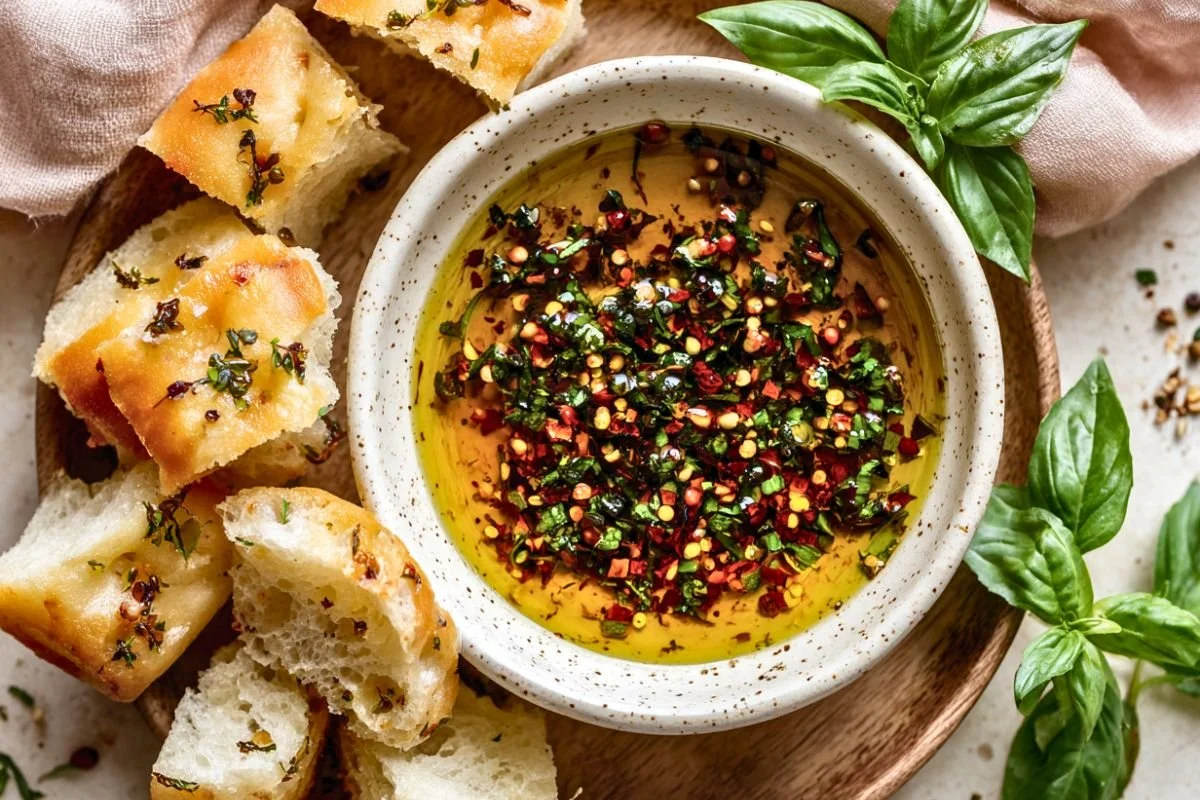
Italian bread dipping oil is extra virgin olive oil stirred with fresh garlic, dried Italian herbs, cracked black pepper, and red pepper flakes, served in a shallow bowl with warm bread for tearing and dipping. Five minutes, one bowl, nothing gets cooked.
What makes this version different is a spoonful of basil pesto. Dried herbs in plain oil separate almost immediately and sink to the bottom, so the last dip is oil and the first dip is grit. The pesto suspends everything, and it adds a basil and Parmesan depth that dried herbs on their own can't reach. I landed on it by accident because I had an open jar in the fridge, and I've never gone back.
I also cut the seasoning way down from where I started. My first version was closer to a paste than a dipping oil, and one teaspoon of red pepper flakes in two tablespoons of oil is a lot of heat for anyone who isn't me. Three parts oil to one part seasoning is the ratio that pours properly, coats the bread evenly, and still tastes bold.
It's a five-minute appetizer for holiday tables, game day, and the nights you need one more thing on the table without turning on the oven. The dry blend keeps for months in a jar, so you can make it ahead and add the oil and garlic the day you serve it.
The finished dip is glossy and garlicky, warm with oregano and basil, sharp from black pepper, with enough red pepper heat to make you reach for the next piece. My husband won't eat my focaccia without it and my fifteen-year-old hoards the bowl, which is the only review system I trust.
Why This One Works
Five minutes, one bowl, no heat. Stir and serve. The only thing standing between you and this is a spoon.
The pesto keeps it together. Dry herbs in plain oil separate and sink. A spoonful of pesto suspends everything so the last dip tastes like the first one.
It's made from what's already in your pantry. Italian seasoning does the work of five separate jars, and nobody at your table is going to audit you.
It scales without math. Doubling for a crowd is just doubling. Nothing curdles, breaks, or overcooks.
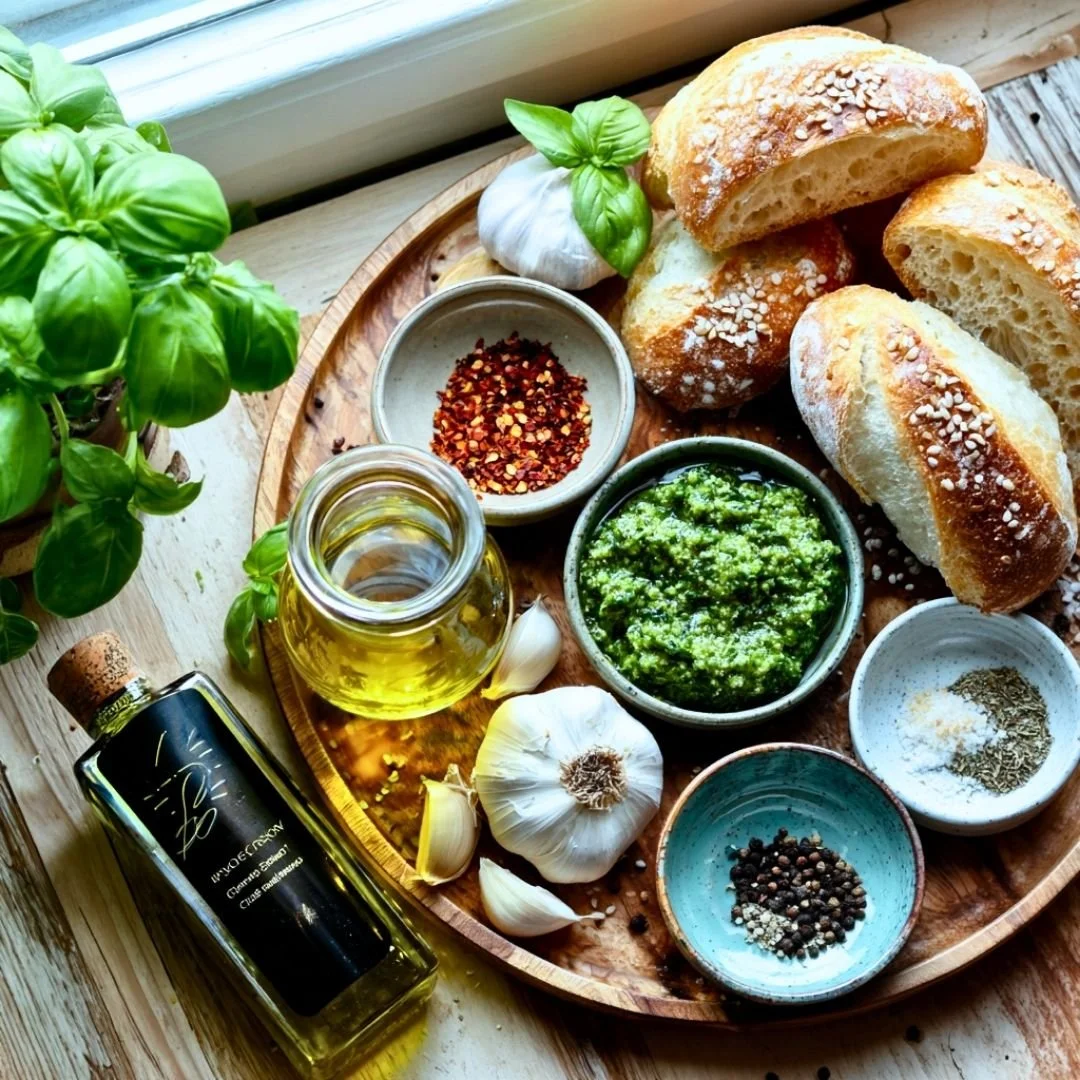
What You Need
Extra virgin olive oil. This is the entire recipe, so use the bottle you actually like. Peppery and grassy is good. Very green, very expensive, very bitter oils can turn harsh when they sit with garlic, so if you own one of those, save it for salad and use a mid-range Italian or Californian EVOO here.
Basil pesto. Jarred is completely fine. One tablespoon is all you need, and it's the difference between "seasoned oil" and "the restaurant one."
Fresh garlic. Minced fine, not pressed. Pressed garlic goes bitter fast in raw oil. Jarred minced garlic works and is milder, which some people prefer.
Italian seasoning. Or make your own with equal parts dried oregano, basil, and parsley plus a pinch of rosemary.
Red pepper flakes, black pepper, kosher salt, onion powder. The heat, the bite, and the reason it tastes finished instead of flat.
Ingredients
1/2 cup extra virgin olive oil (the good bottle, this is the whole recipe)
1 tablespoon basil pesto
3 cloves garlic, finely minced (or 2 teaspoons jarred)
2 teaspoons Italian seasoning
1 teaspoon onion powder
1 teaspoon freshly cracked black pepper
3/4 teaspoon red pepper flakes
1/2 teaspoon kosher salt
Optional: 2 tablespoons finely grated Parmesan
Optional: balsamic glaze, for drizzling
How to Make Italian Bread Dipping Oil
Mix the dry stuff first. Italian seasoning, onion powder, black pepper, red pepper flakes, and salt go in a shallow bowl together. Doing this before the oil means no dry pockets.
Add the garlic and pesto. Stir it into the dry mix until it looks like a rough paste. It will look wrong. Keep going.
Pour in the oil. Add it slowly and stir as you go. It'll loosen into something glossy and speckled.
Taste it with actual bread. Not a spoon. Bread. Oil tastes completely different on bread than it does on a spoon, and this is where you decide if it needs more salt.
Let it sit 10 minutes if you have them. You don't have to. But the herbs soften and the garlic mellows, and it's noticeably better.
Want the Strict Carrabba's Version?
The restaurant doesn't use pesto. Theirs is a dry herb blend that gets spooned onto a plate, then olive oil poured over the top at the table. If you want that exact experience, make the dry mix and keep it in a jar:
1 tablespoon dried oregano
1 tablespoon dried basil
1 tablespoon dried parsley
1 tablespoon crushed red pepper flakes
1 tablespoon freshly cracked black pepper
1 1/2 teaspoons granulated garlic
1 1/2 teaspoons onion powder
1 1/2 teaspoons kosher salt
1/2 teaspoon dried rosemary, crushed
Shake it together in a jar. It keeps for six months in the pantry. To serve, put about 1 1/2 teaspoons of the blend on a small plate, add a clove of fresh minced garlic, and pour 3 to 4 tablespoons of olive oil over it. Don't stir. Let people swirl their own.
This version is better for a crowd because everybody gets their own plate and nobody's double-dipping. Mine is better for a Tuesday because it's one bowl.
If you want a little zing, add a drizzle of balsamic vinaigrette or balsamic glaze right before serving. It gives it that restaurant-level finish without the restaurant bill.
The Best Bread for Dipping
You need something with a crust that holds up and an interior that soaks. In order of how well they work:
Focaccia. Best in class. The dimples hold oil. Ciabatta. Great crust, huge holes, made for this. Crusty Italian loaf or French baguette. The classic. Warm it 8 minutes at 350°F first, always. Sourdough. The tang is a real upgrade with the garlic. Naan. Not Italian, works anyway, and you probably have some.
Warm bread matters more than which bread. Cold bread makes the oil taste greasy instead of rich.
Tips From My Kitchen
Shallow and wide beats deep and narrow. A wide little plate means more surface area per dip. A deep ramekin makes people fish.
Make the seasoning in bulk. Triple the dry mix and jar it. Next time this recipe takes 90 seconds.
Salt at the end, on bread. Olive oil mutes salt. What tastes right on a spoon will taste flat on focaccia.
Room temperature oil only. Cold olive oil clouds up and the flavor goes muted and waxy.
Fresh cracked pepper is not the same as pre-ground. This is the one place I won't budge. Pre-ground pepper tastes like dust here.
Storage and Make-Ahead
Fresh garlic version: Refrigerate in a sealed container and use within 4 days. Raw garlic in oil at room temperature is a botulism risk, so this one lives in the fridge. Full stop. The oil will solidify and cloud when cold. Pull it out 20 to 30 minutes before serving and it comes right back.
Dry blend only: Keeps 6 months in a sealed jar in the pantry. Add the fresh garlic and oil the day you serve it.
Make-ahead for a party: Mix everything except the fresh garlic up to 3 days ahead and keep it in the fridge. Stir in the garlic an hour before guests arrive.
Variations
Cheesy: 2 tablespoons finely grated Parmesan or Pecorino stirred in at the end.
Balsamic: Drizzle balsamic glaze over the top right before serving. Don't stir. The swirl is the point.
Lemon: Zest of half a lemon. Brightens everything and cuts the richness.
Sun-dried tomato: 1 tablespoon finely chopped oil-packed sun-dried tomatoes. Adds sweetness and color.
Extra garlicky: Roast a head of garlic, mash 3 cloves in. Sweeter and deeper than raw.
Questions People Actually Ask (FAQ)
Why does my bread dipping oil taste bitter?
Almost always the olive oil, occasionally the garlic. Very robust, very green extra virgin olive oils are naturally high in polyphenols, which read as bitter and peppery on their own. That's a quality marker in a salad and a problem in a dip. Switch to a milder Italian or Californian EVOO. If it's the garlic, you probably used a press: pressed garlic releases more of the harsh compounds than a knife does.
Can I use dried garlic instead of fresh?
Yes, and it makes the dip shelf-stable at room temperature. Use 1 teaspoon granulated garlic in place of the 3 fresh cloves. You lose some sharpness and gain a week of fridge life.
How long does it keep?
Four days refrigerated with fresh garlic. Six months in the pantry if it's just the dry blend with no oil or fresh garlic added.
Is this gluten free?
The dip is. The bread isn't. Serve it with gluten free crackers, sliced cucumber, or a gluten free baguette and the whole plate works.
Can I make it in a food processor?
You can, and it'll be smoother and greener. I don't, because processing the herbs releases more oil from them and the flavor turns muddy after a day. If you're serving immediately, go for it.
What else can I use it for?
Drizzle it over pasta, spoon it on sliced tomatoes with mozzarella, brush it on flatbread before it goes in the oven, or toss roasted potatoes in it. It is a finishing oil that happens to be good with bread.
What to Serve With It
Bread dip is a starter, not a plan. Put it out with Homemade Pico de Gallo for a mixed appetizer board, or lead into a real Italian dinner with something from my pasta recipes. If you're building a full spread, my dips and appetizers collection has the rest of the table covered, and the sides and salads that go with it are here.
Saucy Spoon Co
Italian Bread Dipping Oil (Carrabba's Copycat)
Garlicky olive oil with herbs, heat, and a spoonful of pesto that keeps everything from sinking. Five minutes, one bowl, no cooking.
Ingredients
- 1/2 cup extra virgin olive oil
- 1 tablespoon basil pesto
- 3 cloves garlic, finely minced
- 2 teaspoons Italian seasoning
- 1 teaspoon onion powder
- 1 teaspoon freshly cracked black pepper
- 3/4 teaspoon red pepper flakes
- 1/2 teaspoon kosher salt
- 2 tablespoons grated Parmesan (optional)
- Balsamic glaze, for drizzling (optional)
Instructions
- Combine the Italian seasoning, onion powder, black pepper, red pepper flakes, and kosher salt in a shallow serving bowl.
- Stir in the minced garlic and pesto until the mixture forms a rough paste.
- Pour in the olive oil slowly while stirring, until glossy and evenly combined.
- Taste on a piece of bread rather than a spoon, and adjust the salt.
- Rest 10 minutes so the herbs soften and the garlic mellows, then serve with warm bread.

Follow Saucy Spoon Co
Want more easy recipes, dinner ideas, kitchen favorites, and real-life food finds? Come hang out with me around the internet.
As an Amazon Associate, I may earn from qualifying purchases.