
Cafeteria School Pizza (The Rectangle Kind)
The Homemade Cafeteria Pizza That Tastes Exactly Like the School Lunch Line
You know exactly what this is.
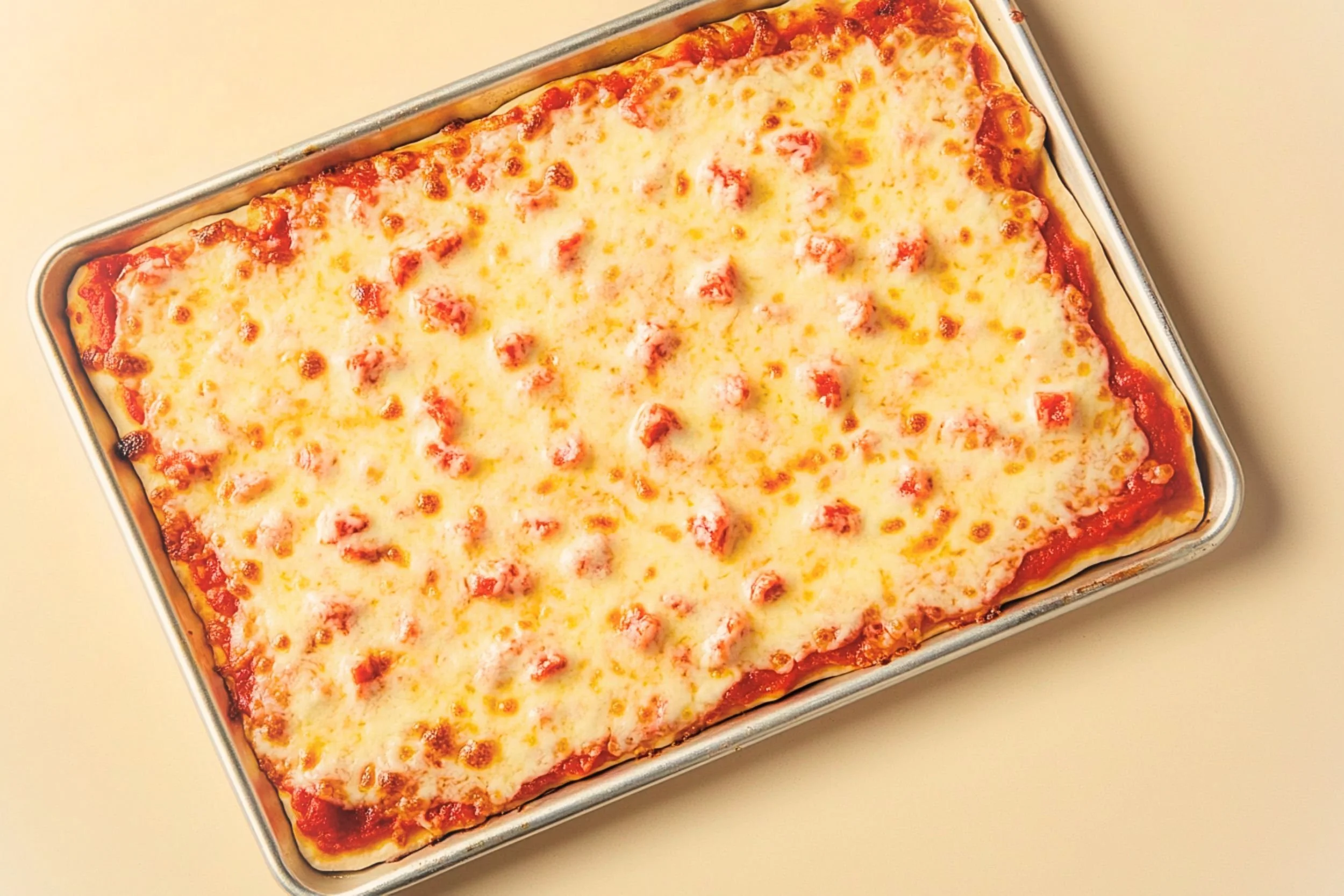
It's not fancy pizza. It's not wood-fired. It's not topped with fresh burrata and hand-pulled dough. It's the rectangle pizza from the school cafeteria — thick, soft, slightly doughy, sliced into squares, covered in sweet tomato sauce and melted mozzarella with diced pepperoni. Tiny, even, perfectly chopped little pieces scattered across the whole thing.
If you ate this every Friday from kindergarten through 8th grade and still think about it, this post is for you.
I spent a stupid amount of time getting this right. The dough has to be thick but not heavy. The sauce has to be sweet — not marinara-sweet, like actual school sauce sweet. And the pepperoni is non-negotiable: diced. Not slices. Diced. That's the whole thing.
Serve it with homemade ranch for dipping and I promise you will be nine years old again for exactly 4 minutes.
Why This Pizza Is Different From Every Other Pizza Recipe
Most homemade pizza recipes are trying to recreate Italian pizzeria pizza. This is not that.
Cafeteria school pizza is its own thing. It has its own rules:
The dough is thick and soft. It's not chewy, it's not crispy, it's not crunchy. It's soft. The bottom has a slight golden bake but the inside is pillowy and bread-like. You bake it in a 9x13 pan and it fills every corner.
The sauce is sweet. Real school pizza sauce had sugar in it. Not a lot, but enough that it tasted nothing like the pizza sauce you buy at the store. It was sweet and slightly thick and it was the only sauce some of us would ever eat as kids.
The pepperoni is diced. Not sliced rounds. Not mini pepperoni. The pepperoni was cut into small pieces — little quarter-inch diced bits — and scattered evenly across every single square. This is the thing people remember most and never know how to describe when they try to Google it.
The cheese gets just a little golden. Not burnt. Not deep brown. Just barely, slightly golden in a few spots across the top. That's when it's done.
Ingredients
What You Need
For the dough:
2¼ tsp active dry yeast (1 standard packet)
1 cup warm water (110°F — warm to the touch, not hot)
1 tsp granulated sugar
2½ cups all-purpose flour
1 tsp salt
2 tbsp olive oil, plus more for the pan
For the sauce:
1 can (15 oz) tomato sauce
1 tbsp granulated sugar ← this is the secret
1 tsp garlic powder
1 tsp onion powder
½ tsp dried oregano
½ tsp dried basil
¼ tsp salt
Pinch of black pepper
For the toppings:
1½ cups shredded low-moisture mozzarella (from a block, not pre-shredded bags)
4 oz pepperoni, finely diced ← this is the other secret
For serving:
Homemade ranch dressing ← non-negotiable
How to Make Cafeteria School Pizza
Step 1: Make the dough
In a large bowl, combine warm water and sugar. Sprinkle yeast over the top and let it sit for 5–7 minutes until foamy. If your yeast isn't foaming, your water was too hot or too cold — start over. This step matters.
Add olive oil, salt, and flour. Mix until a shaggy dough forms, then turn it out onto a lightly floured surface and knead for about 5 minutes until smooth and slightly tacky but not sticky.
Drizzle a little olive oil in the bowl, turn the dough to coat, cover with a clean kitchen towel, and let it rise for 45–60 minutes until roughly doubled.
Short on time? If you want to skip the rise, you can use a pound of store-bought pizza dough. Press it into the pan and give it 15 minutes to rest before saucing. The texture won't be quite as authentic but it'll get you most of the way there.
Step 2: Make the sauce
Combine all sauce ingredients in a small saucepan over medium-low heat. Stir and simmer for 5 minutes. Taste it. It should be slightly sweet, gently seasoned, and just a little thick. This is your school sauce. Set aside.
Note: The sugar is intentional and it is correct. Do not reduce it.
Step 3: Prep the pepperoni
Take your 4 oz of pepperoni and dice it. Not slice it — dice it. Cut each round into small pieces, roughly ¼-inch. This takes about 3 minutes and it is the entire reason this pizza tastes right. Pre-sliced pepperoni rounds will not give you the same result. Diced pepperoni cooks differently, it distributes differently, and it looks right. Do this.
Step 4: Press the dough
Generously oil a 9x13 baking pan with olive oil. Punch the risen dough down and press it evenly into the pan all the way to the corners. It should be about ½ inch thick. Cover loosely and rest for 15 minutes while the oven preheats.
Preheat your oven to 425°F.
Step 5: Sauce and top
Spread the sauce evenly over the dough, leaving about a ½-inch border. Don't oversauce — the school pizza had a nice even layer, not a soup situation. Sprinkle mozzarella evenly across the entire surface. Scatter diced pepperoni evenly over the cheese.
Step 6: Bake
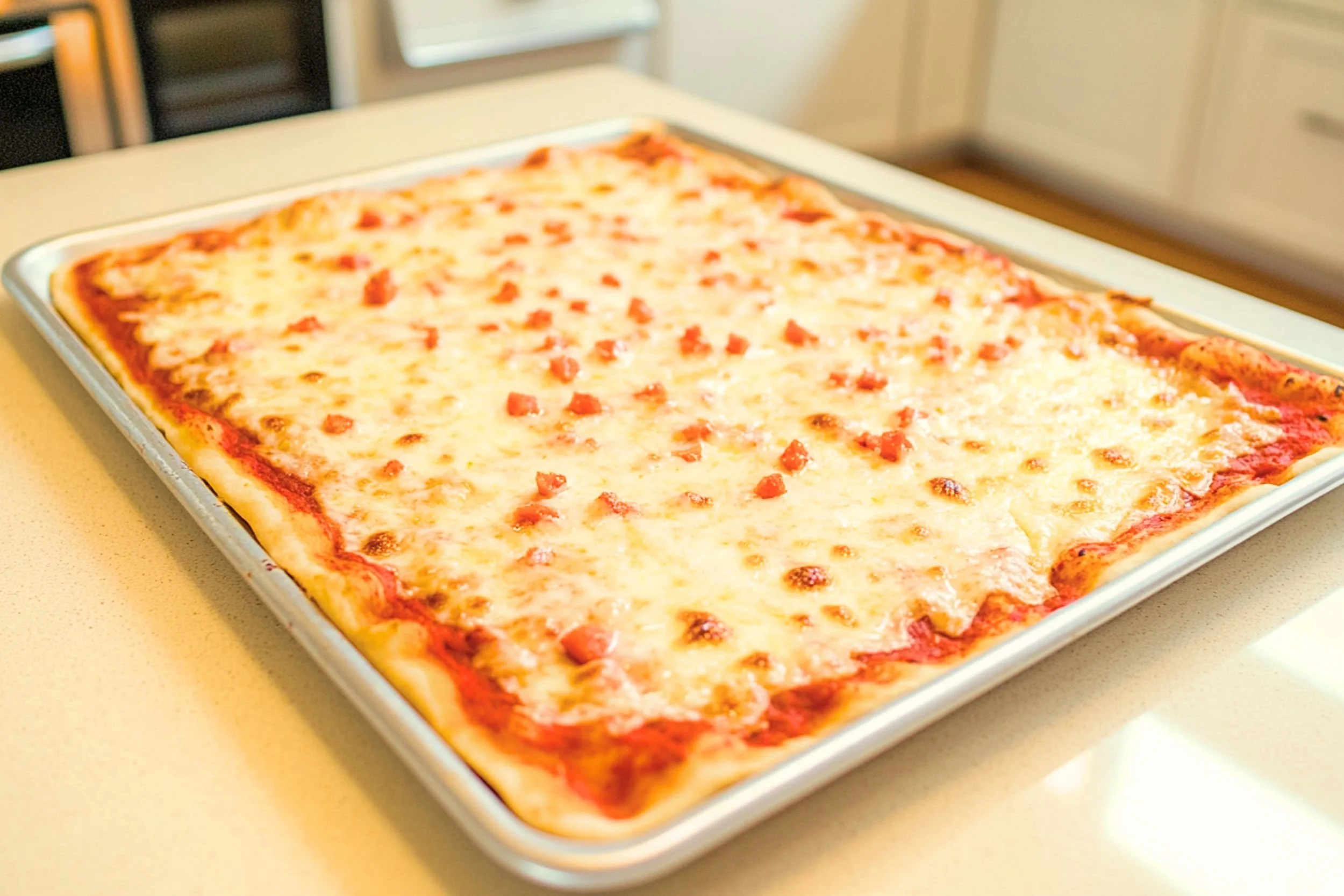
Bake at 425°F for 18–22 minutes, until the cheese is fully melted with light golden spots and the edges of the crust are golden brown. The bottom should be set — lift a corner with a spatula to check. It should be golden, not pale.
Remove from oven and let rest 5 minutes before slicing.
Step 7: Cut it right
Cut into rectangles. Not triangles. Not wedges. Rectangles. Three columns across, four rows down, makes 12 squares. Just like the cafeteria served it.
Serve immediately with a side of homemade ranch for dipping
Pro Tips for Getting This Right
Use block mozzarella, not a bag. Pre-shredded mozzarella has a starch coating that prevents it from melting the way cafeteria pizza cheese did. Buy a block and shred it yourself. It takes 3 minutes and makes a noticeable difference.
The water temperature for yeast matters. Too hot kills the yeast. Too cold and it won't activate. Aim for 105–110°F. If you don't have a thermometer, it should feel warm like bathwater — comfortable but not hot.
Don't skip the sugar in the sauce. I know it sounds wrong. It is not wrong. School pizza sauce was sweet. This is load-bearing sugar. Do not leave it out.
Let the baked pizza rest before cutting. Five minutes is enough. The cheese needs to set slightly or it'll slide off every slice. Patience.
Oil the pan generously. This gives the bottom crust that slightly golden, slightly crisp texture. Bare pans make pale, sad pizza.
Make It Your Own — Variations
Sausage version: Swap the diced pepperoni for browned crumbled Italian sausage. Still dice it — keep the pieces small and even.
Extra cheese: Double the mozzarella. The school pizza some of us remember was loaded. Go for it.
Add bell pepper: Small diced green bell pepper scattered with the pepperoni is very on-brand for school pizza.
Make it a Friday night: Pair this with [Dirt Pudding Cups] ← internal link for the full school cafeteria experience at home. Your kids will think you've lost your mind in the best possible way.
Storage + Reheating
Fridge: Store leftover pizza in an airtight container or wrapped tightly in foil for up to 4 days.
To reheat (the right way): Reheat slices in a 375°F oven for 8–10 minutes, or in a skillet over medium-low heat with the lid on for 4–5 minutes. This re-crisps the bottom and melts the cheese without drying it out. Microwaving is allowed if you're desperate but it softens the crust.
Freezer: Freeze fully baked, cooled slices individually wrapped in plastic wrap and stored in a zip bag for up to 2 months. Reheat directly from frozen in the oven at 375°F for 12–15 minutes.
Frequently Asked Questions
What kind of pepperoni should I use for school cafeteria pizza? Any standard pepperoni works — the key is dicing it yourself into small pieces rather than using slices. You're looking for roughly ¼-inch diced bits. The diced texture distributes more evenly and cooks into the cheese differently than round slices. This is what made school pizza taste like school pizza.
Can I use store-bought pizza dough? Yes. One pound of store-bought pizza dough (thawed if frozen) pressed into your oiled 9x13 pan works great as a shortcut. Let it rest 15 minutes after pressing before you add the sauce. The texture will be slightly different but it's still very much the right pizza.
Why does the sauce need sugar? Because school cafeteria pizza sauce was slightly sweet, and that's what makes this taste like the real thing rather than a regular homemade pizza. It's a small amount — just one tablespoon for the whole pizza — but it makes the sauce taste distinctly familiar to anyone who grew up eating cafeteria pizza.
What size pan should I use? A standard 9x13 baking pan is exactly right. This gives you the proper thickness and lets you cut it into 12 squares — three columns, four rows — which is the correct cafeteria serving format.
What should I dip school cafeteria pizza in? Ranch. Always ranch. Make the [homemade ranch recipe here] ← internal link and do not skip this. It completes the whole experience.
Can I make the dough ahead of time? Yes. Make the dough through the rise step, punch it down, cover tightly, and refrigerate overnight. Pull it out 30 minutes before you're ready to press it into the pan. Cold dough needs time to relax before it'll stretch.
If You Loved This, Try These
Homemade Ranch Dressing ← You need this for dipping. I'm not asking.
Crockpot Chicken Tacos ← Another weeknight/family crowd-pleaser
Dirt Pudding Cups← Complete the school lunch nostalgia experience
Creamy Chicken Bacon Ranch Pasta ← Ranch shows up again and it's glorious