How to Make a Snackle Box (That Actually Survives the Day)
I've been packing these for my four kids since before they had a cute name. Here's how I really do it.
If you've spent any time online the last couple of summers, you've seen one: a fishing tackle box, except instead of lures and hooks, every little compartment is packed with snacks. Cheese here, crackers there, a pile of pretzels, a few tangerine segments. It's called a snackle box — snack plus tackle box — and I have been making these for my four kids since long before the internet decided it was a trend.
Back then it wasn't a trend, it was survival. Four kids, one beach day, and small people who get hungry on a strict 20-minute rotation. I needed everyone's snacks in one container that closed, traveled, and didn't turn into a melted mess by noon. A tackle box did the job. Now those same boxes have a name and the whole internet has caught up — which is great, except a lot of what you see online is built to be photographed, not actually eaten at a soccer field.
This is the real version. I'll walk you through the box and supplies to buy (all under $20), exactly what I pack and why, how I build one that holds up in a cooler, plus a big list of filling ideas and a few themed boxes for road trips, the beach, and the Fourth of July. By the end you'll be able to put one together in about ten minutes — for a carful of kids, or just for yourself (no judgment, I keep one in my own fridge too).
This post contains affiliate links. If you buy through them I may earn a small commission at no extra cost to you — I only link to things I'd actually put in my own cart.
What Is a Snackle Box?
A snackle box is a divided container — usually a plastic tackle box from the fishing aisle — used to hold an assortment of snacks instead of fishing tackle. Each compartment gets a different snack: cheese in one, crackers in another, fruit, pretzels, whatever you like. The result is a portable, sorted, mess-free snack spread you can take anywhere.
People use them for road trips, beach days, pool days, kids' sports, picnics, flights, and movie nights — or just keep one in the fridge for easy snacking at home. Think of it as a personal-sized charcuterie board with a snap lid and a handle.
Why I Swear By Snackle Boxes
One container, zero crinkly bags. Everything's in one place and the lid actually closes.
Nobody fights. Every kid can see exactly what they're getting. Picky eater? Build their box the way they like it.
It travels. Snap the lid, grab the handle, go. Beach, car, bleachers — done.
It saves money. You buy snacks in normal-sized packages and portion them yourself instead of paying the markup on individually wrapped everything. I'm the mom who makes homemade Uncrustables to save money — snackle boxes run on the exact same logic.
It uses up odds and ends. Half a sleeve of crackers, a handful of pretzels, the last of the cheese — a snackle box gives all of it a job.
You can build it the night before. Future-you will be grateful.
The Golden Rule: If It Can't Handle an Ice Pack, It Doesn't Go In
Here's the part most snackle box posts skip. A snackle box only works if the food survives the day. I build every box around one question: will this still be good after a few hours in a cooler or next to an ice pack?
That rules a lot of things in and a few things out. What holds up beautifully: cheese, pepperoni, crackers, pretzels, Cheez-Its, raisins, yogurt-covered raisins, and sturdy fruit like tangerines and grapes. What I skip for anything beyond a quick trip: anything that wilts, melts, or browns fast. If we're just snacking at home, anything goes — but the second the box leaves the house, it's cooler-proof food only.
What I Actually Pack
This is my real, on-repeat snackle box — the one my kids actually get:
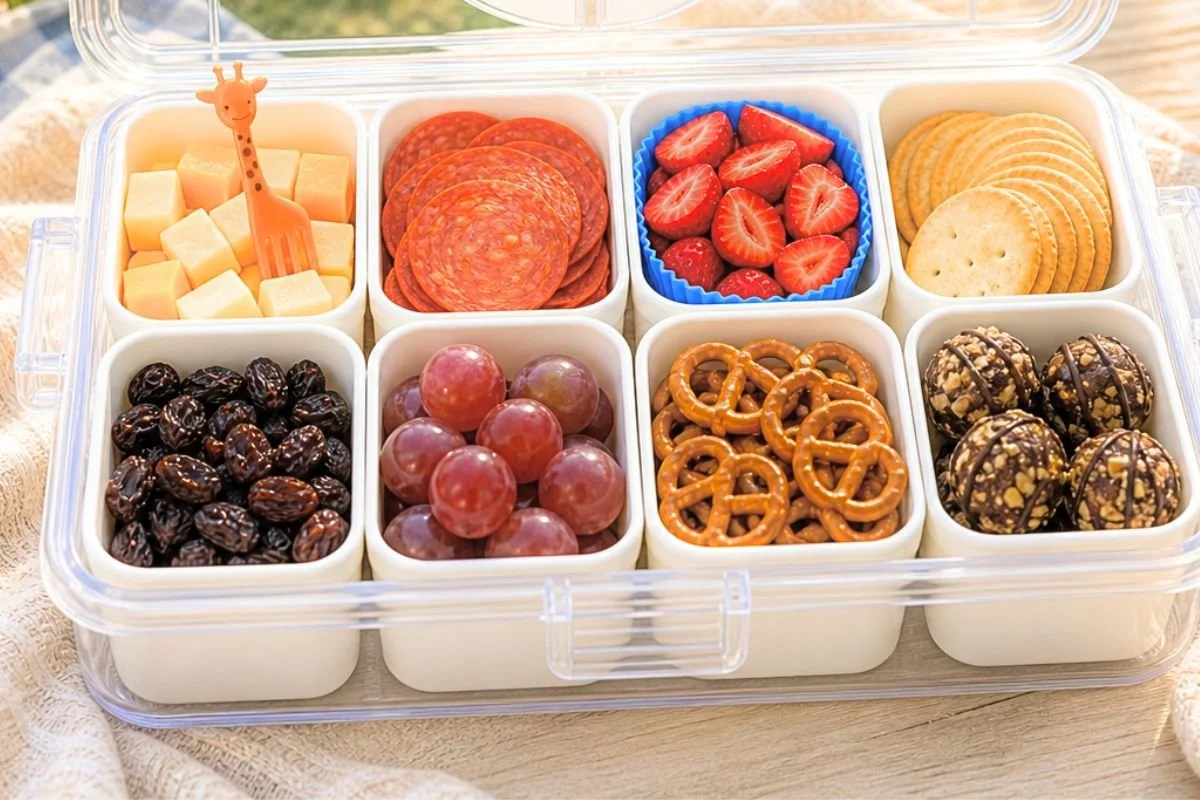
Cheese, sliced from a block. I buy a block of cheese and cut it into slices or cubes myself. It's cheaper than pre-sliced and it holds up great with an ice pack.
Pepperoni. Folds up small, kids love it, survives a cooler.
Crackers. Whatever's in the pantry — they go in last so they stay crisp.
Pretzels. Cheap, sturdy, no mess.
Cheez-Its. The crowd favorite. Always.
Raisins and yogurt-covered raisins. One feels healthy, one feels like a treat, and both travel well.
Tangerines. I peel and segment them — easy, sweet, and they hold up when they're cold.
Grapes. One fruit everyone seems to love and you can freeze them or they still hold up either way!
Mix a few from each lane — something savory, something crunchy, something fruity, something a little sweet — and every kid finds something they want.
How I Build One
Start to finish, this takes about ten minutes:
1. Make sure the box is bone dry. Leftover water is what makes crackers sad.
2. Put the juicy stuff in first, in a lined compartment. Fruit goes in first — drop a mini silicone cup into the compartment so any juice stays put.
3. Add the dry, crunchy snacks last. Crackers, pretzels, and Cheez-Its go in at the end, away from anything damp.
4. Keep dips in a lidded cup. Never pour a dip straight into a compartment — use a small condiment cup with a lid.
5. Mix the colors on purpose. Orange tangerine next to pale cheese next to tan crackers. A little contrast is what makes it look good.
6. Fill every compartment, even a little. A few raisins is enough — empty wells just look unfinished.
7. Snap the lid and get it cold. Refrigerate until you leave, and pack it with an ice pack if you're heading out.
The Box and Supplies — Everything Under $20
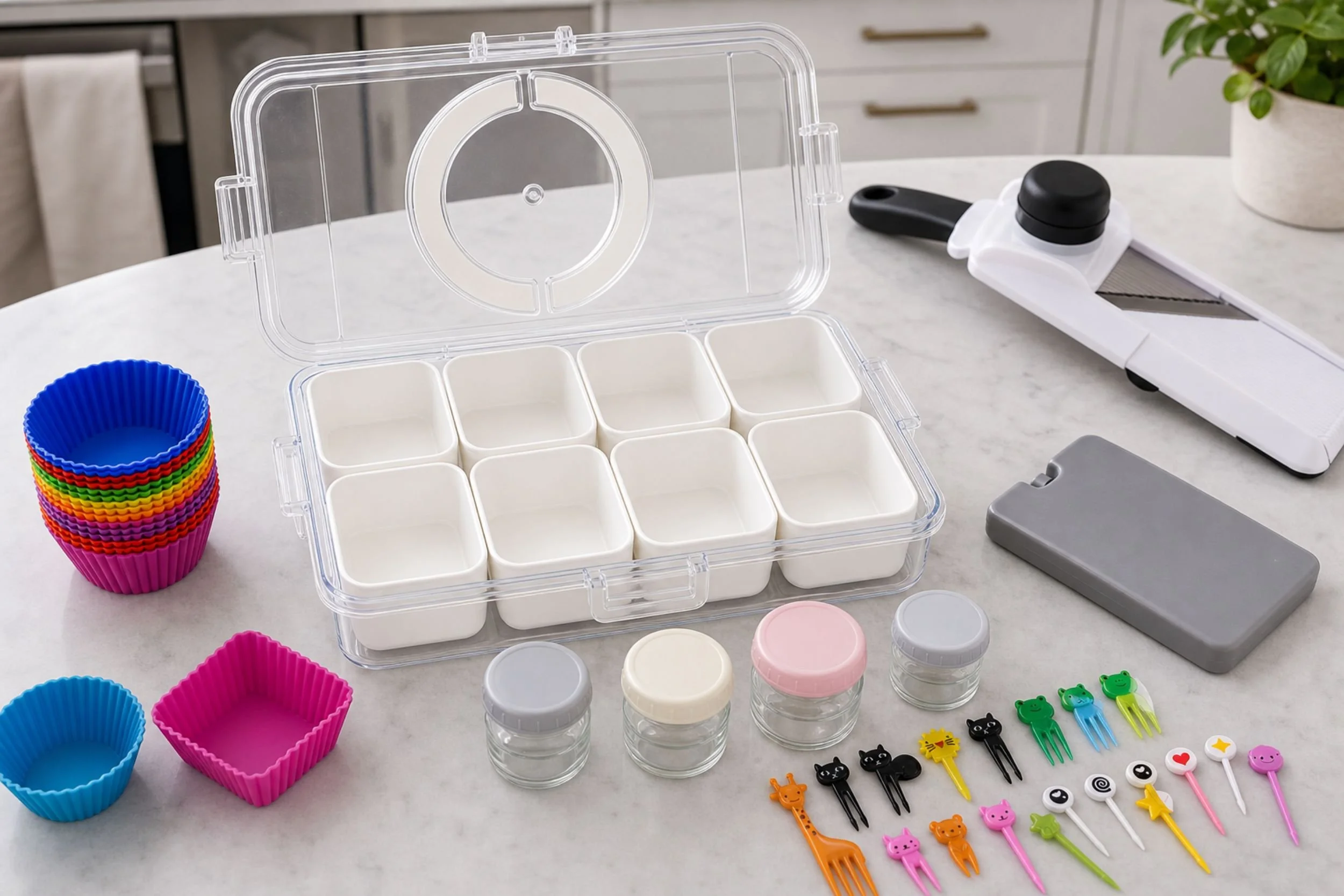
You really only need one thing: the box. Everything else just makes your boxes fresher, neater, and easier to clean.
A snackle box. Look for a divided tackle box or bento-style container with at least 6 compartments, removable trays, a snap-and-lock lid, a handle, and food-safe BPA-free plastic. Around $10 to $16. This is the one true essential.
Mini silicone baking cups. Drop them into compartments to keep juicy snacks away from crunchy ones — and cleanup gets much easier. Around $6.
Small lidded condiment cups. For dips like hummus, ranch, or peanut butter, so nothing leaks. Around $8.
Slim reusable ice packs. Non-negotiable in summer. They keep cheese and pepperoni safe and everything else fresh. Around $10.
Cute food picks or toothpicks. Optional, but they make cheese and fruit easy to grab and the box look nicer. Around $5.
A small produce chopper or cheese slicer. Speeds up cutting your block cheese and fruit. Around $10 to $15.
You can view all of these here on my Amazon Storefront for Snackle Boxes!
More Filling Ideas
Want to mix it up? Pick a few from each lane:
Fruit that travels: grapes, blueberries, strawberries, watermelon cubes, cantaloupe, apple slices, tangerine segments, pineapple chunks.
Savory and protein: cheese cubes, string cheese, pepperoni, mini salami, turkey roll-ups, hard-boiled eggs, hummus.
Crunchy: pretzels, crackers, Cheez-Its, popcorn, veggie straws, pita chips.
Veggies: baby carrots, cucumber slices, cherry tomatoes, snap peas, bell pepper strips.
A little sweet: yogurt-covered raisins, dark chocolate, mini cookies, granola clusters, a couple of homemade protein balls.
Dips, always in a lidded cup: ranch, hummus, peanut butter, Greek yogurt, salsa.
Themed Snackle Boxes for Summer
Road trip box: dry and low-mess only — pretzels, crackers, Cheez-Its, raisins, cheese, pepperoni. Nothing that needs a fork or stains fingers.
Beach day box: cooler-proof and a little hydrating — grapes, tangerines, cheese, crackers, and an extra ice pack.
Fourth of July box: lean into red, white, and blue — strawberries, blueberries, white cheese cubes, and a few patriotic treats.
Kids' lunch box: their no-fuss favorites — cheese, crackers, fruit, a few veggies, and one treat compartment.
At-home fridge box: anything goes when it's not traveling — build it Sunday and snack from it all week.
Keeping It Cold and Not Soggy
A few things I've learned the hard way:
Pat fruit dry before it goes in. Surface water is what makes everything soggy.
Line the juicy compartments with a silicone cup.
Build a dry side and a wet side — keep crunchy snacks together, away from the fruit.
Add crackers and chips last, right before you leave if you can.
Always use a lidded cup for dips. Always.
Keep it cold. Refrigerate until you head out and travel with an ice pack — cold keeps cheese and pepperoni safe, not just fresh.
Don't overfill. Snacks squished against the lid get crushed.
Can You Make a Snackle Box Ahead of Time?
Yes — and you should. Build it the night before and keep it in the fridge. Add crackers and anything that browns, like apple slices, at the last minute. An assembled snackle box keeps in the fridge for up to 2 days. Once it's been out in the heat all day, treat leftovers like any picnic food — when in doubt, toss it.
Snackle Box FAQ
What is a snackle box?
A snackle box is a divided container, usually a tackle box, used to hold an assortment of snacks instead of fishing tackle. Each compartment holds a different snack, so you end up with a portable, sorted snack spread.
What do you put in a snackle box?
A mix of savory, crunchy, fruity, and a little sweet — for example cheese, pepperoni, crackers, pretzels, Cheez-Its, raisins, yogurt-covered raisins, and tangerines. For trips, stick to foods that hold up with an ice pack.
What box do you use for a snackle box?
A divided tackle box or bento-style container with at least 6 compartments, removable trays, a snap-and-lock lid, a handle, and food-safe BPA-free plastic.
How do you keep a snackle box from getting soggy?
Pat fruit dry, line juicy compartments with silicone cups, keep crunchy snacks separate from wet ones, put dips in lidded cups, and add crackers last.
Can you make a snackle box ahead of time?
Yes. Build it the night before and refrigerate it, then add crackers and apple slices right before you go. It keeps in the fridge up to 2 days.
Try These Next
If you're building a whole summer spread, here are a few more from the blog:
Strawberry Frozen Yogurt Bites — a frozen sweet treat that's perfect alongside a beach-day box.
No-Bake Reese's Protein Balls — portable, sturdy, and they hold up right in the box.
Homemade Pico de Gallo — spoon it into a lidded cup for a fresh dip.
Summer Chicken Pasta Salad with Champagne Vinaigrette — the main event for a full cookout spread.